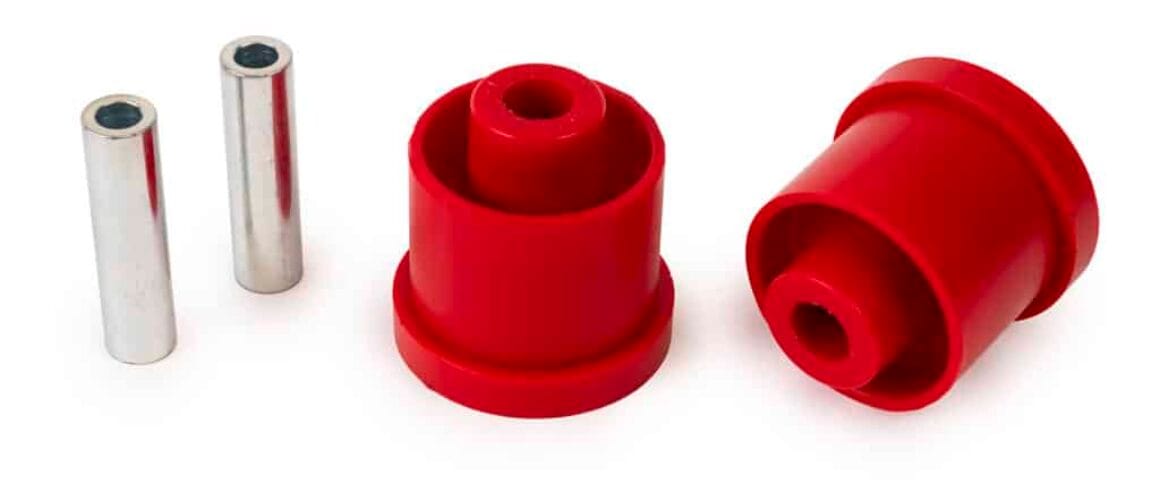
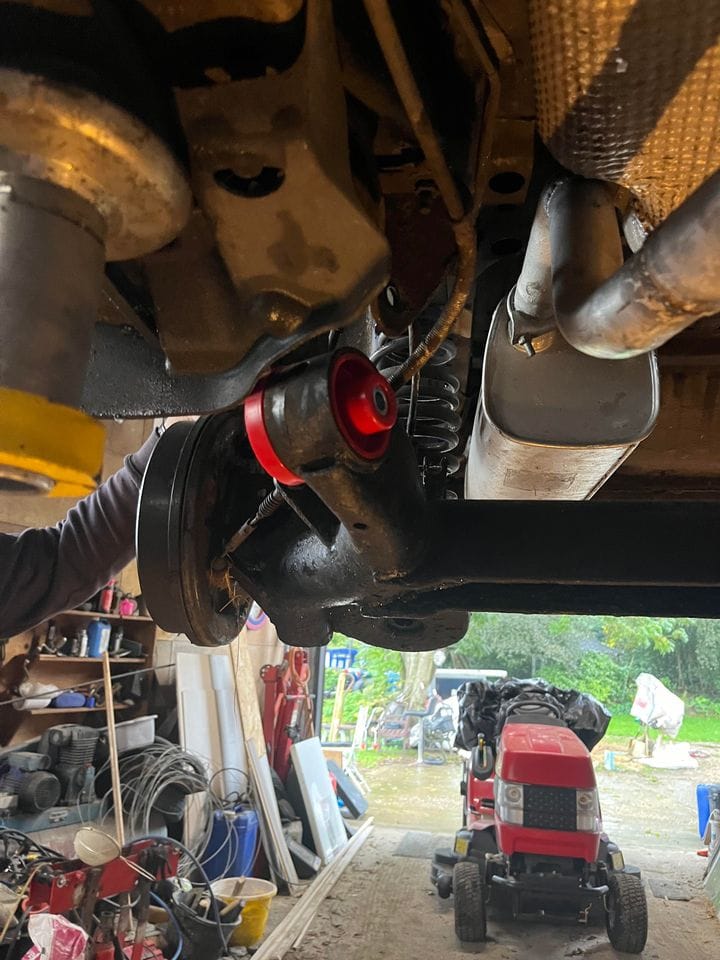
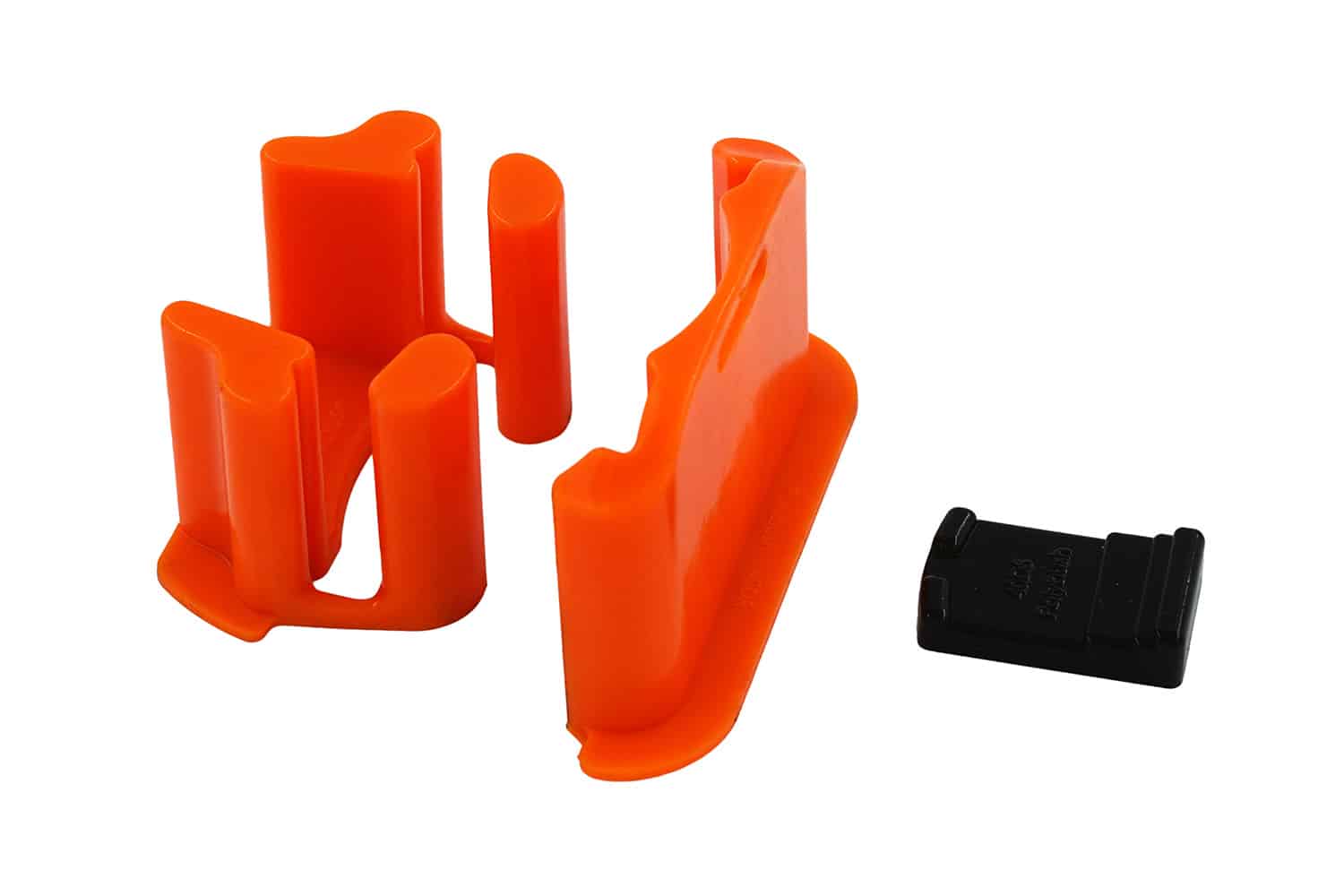
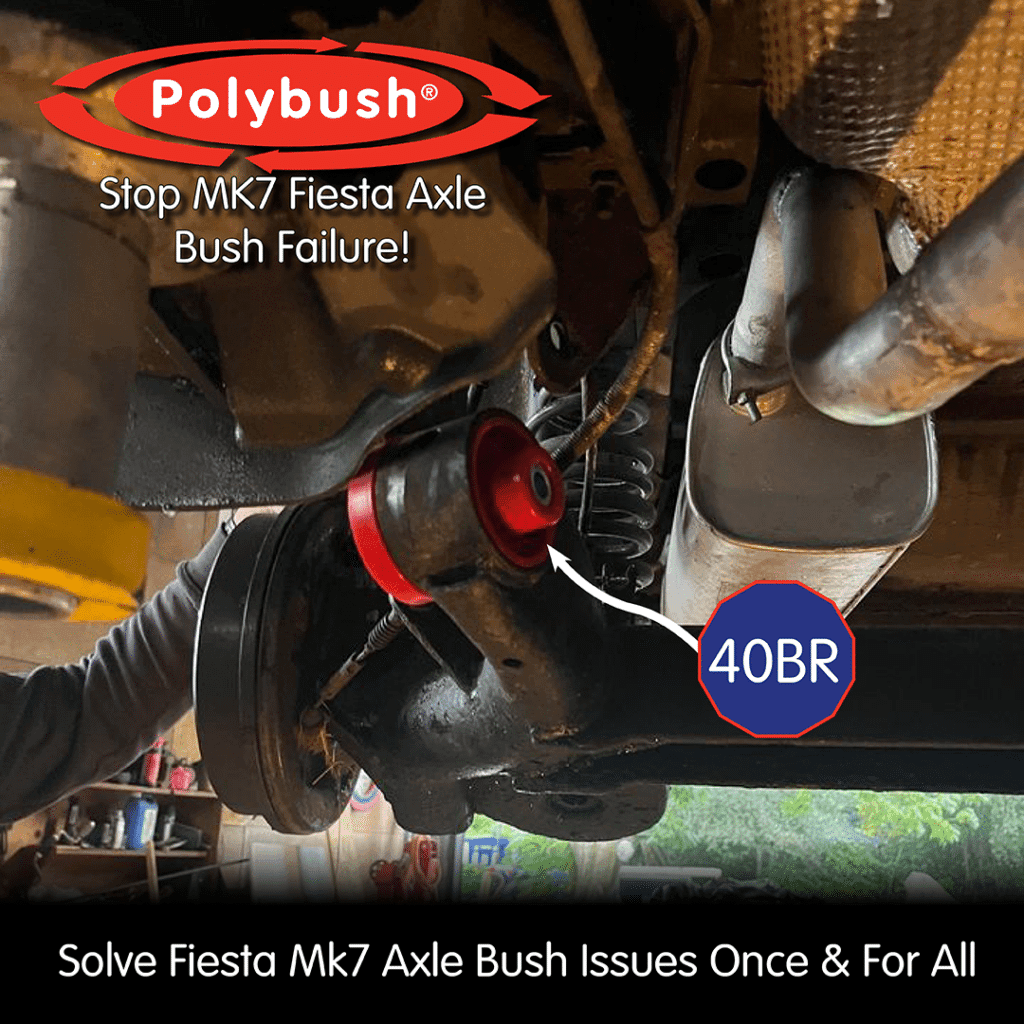
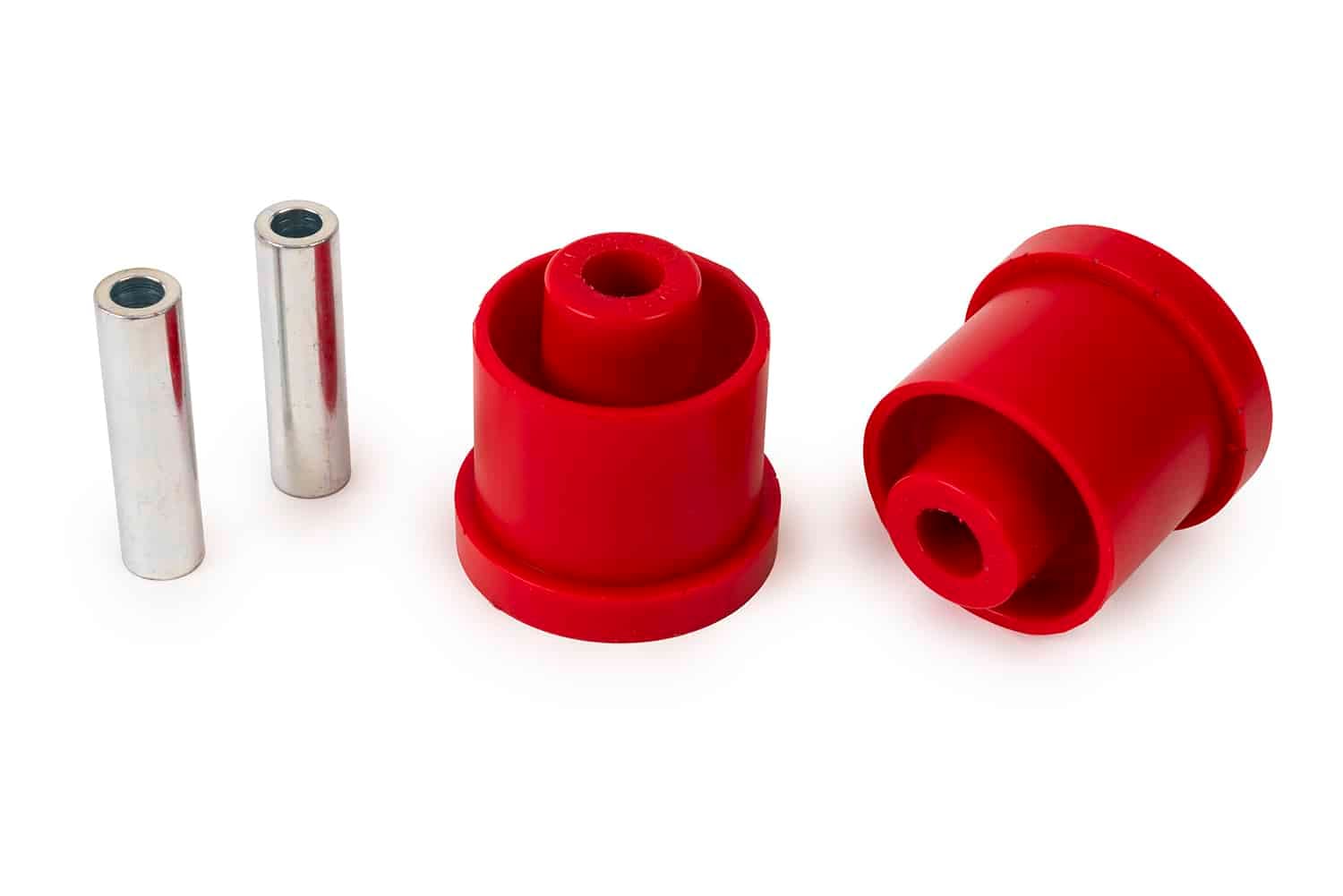
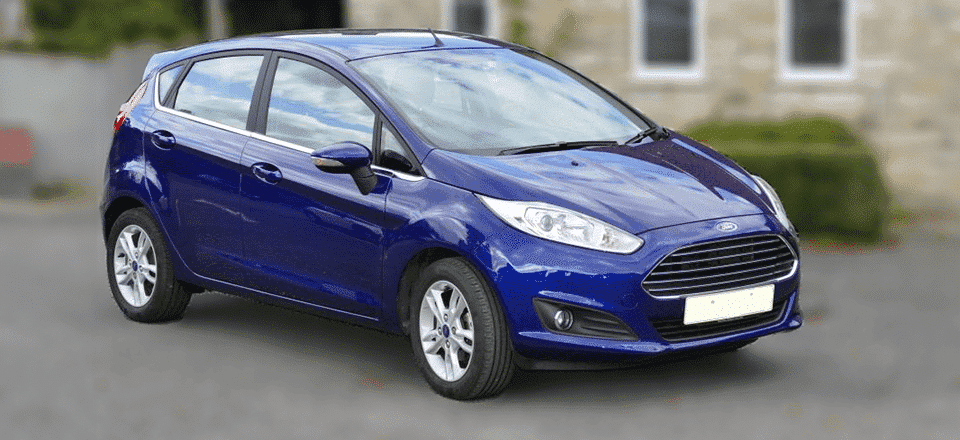
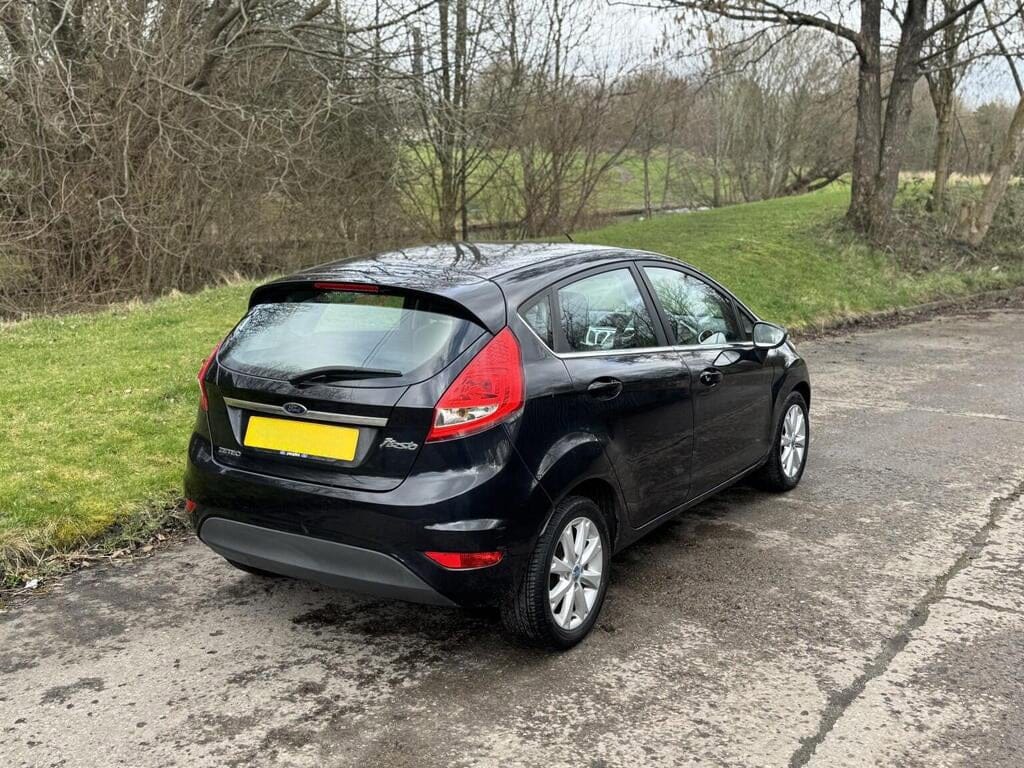
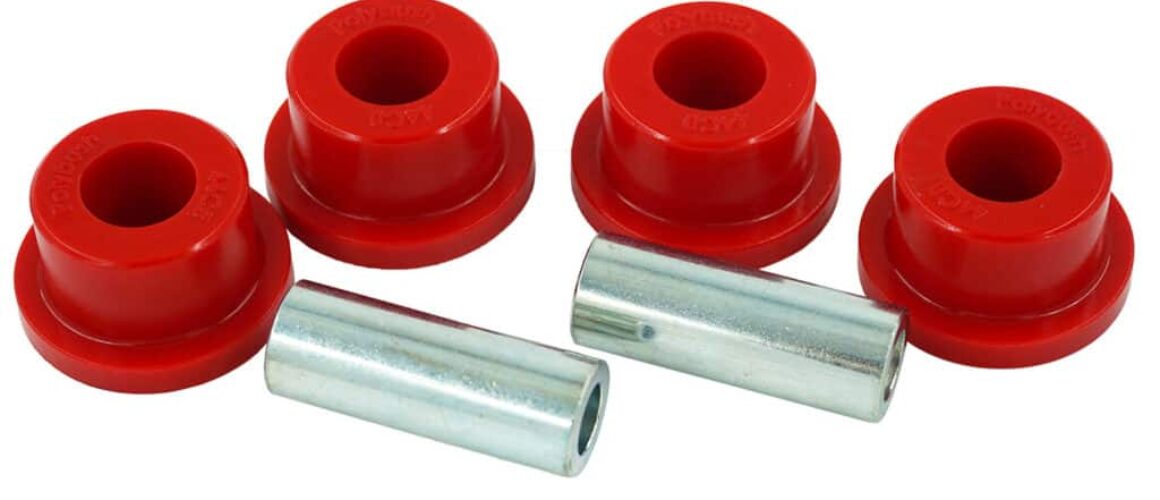
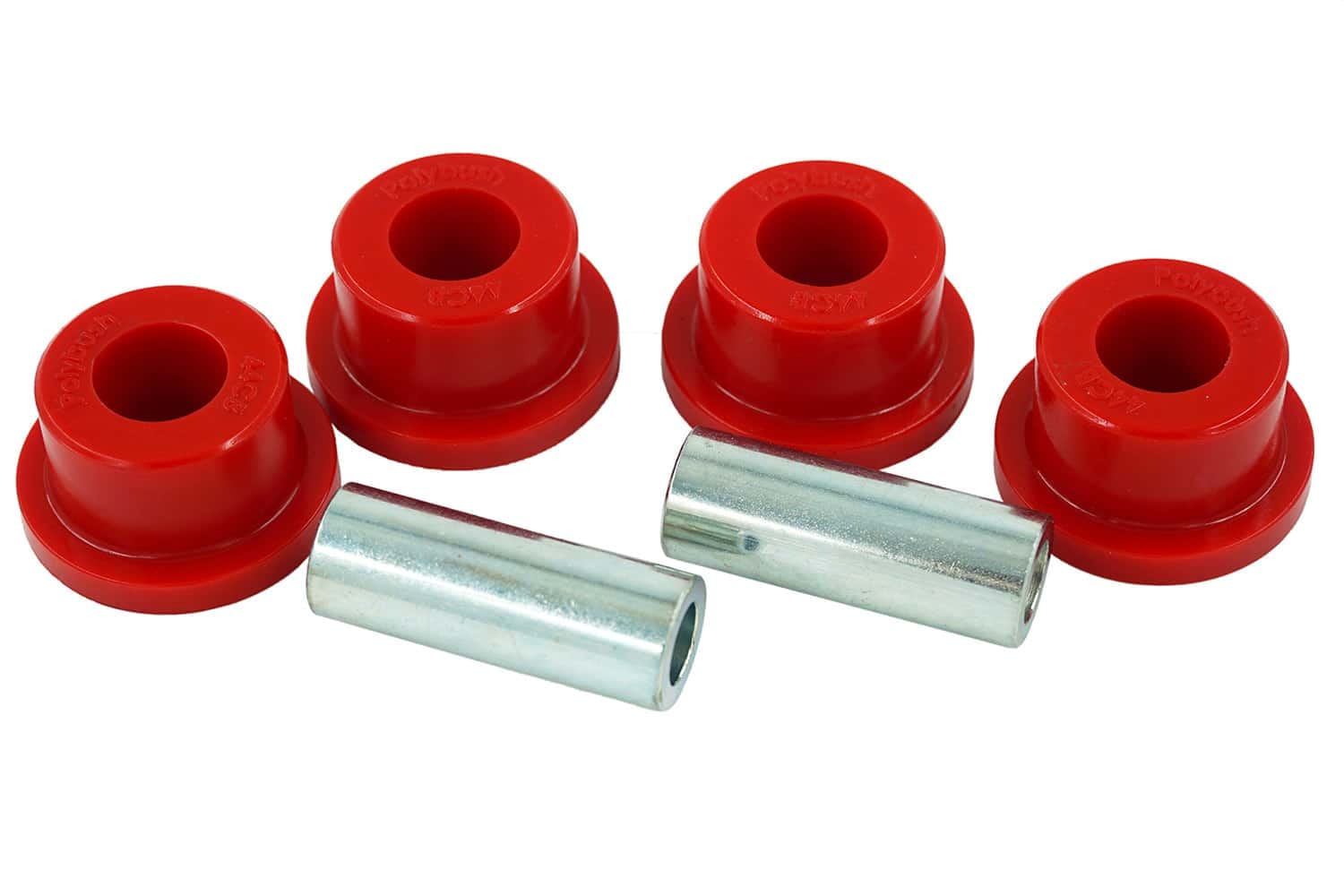
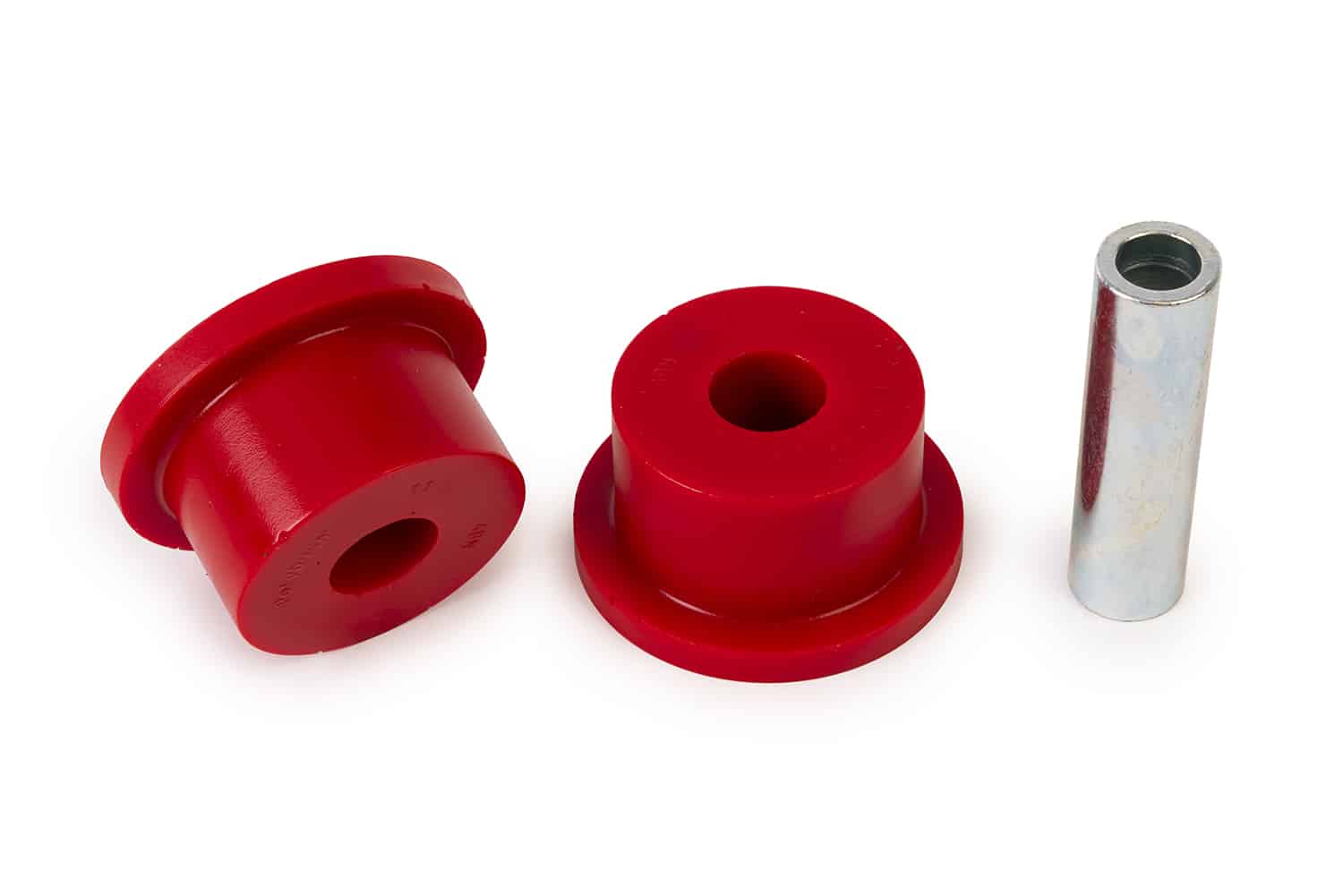
Our 40BR Rear Beam Bush is engineered to replace OEM part numbers: 1535296, 1751679, 1805815, 1805866, 1871475, 8V51-5K653-AA, AY11-5K653-AA, D65128460, Delphi TD1629W, and Febi 34748. It’s designed for everyday driving while providing long-lasting stability.
Why OEM Rear Beam Bushes Fail
Rubber Deterioration Over Time
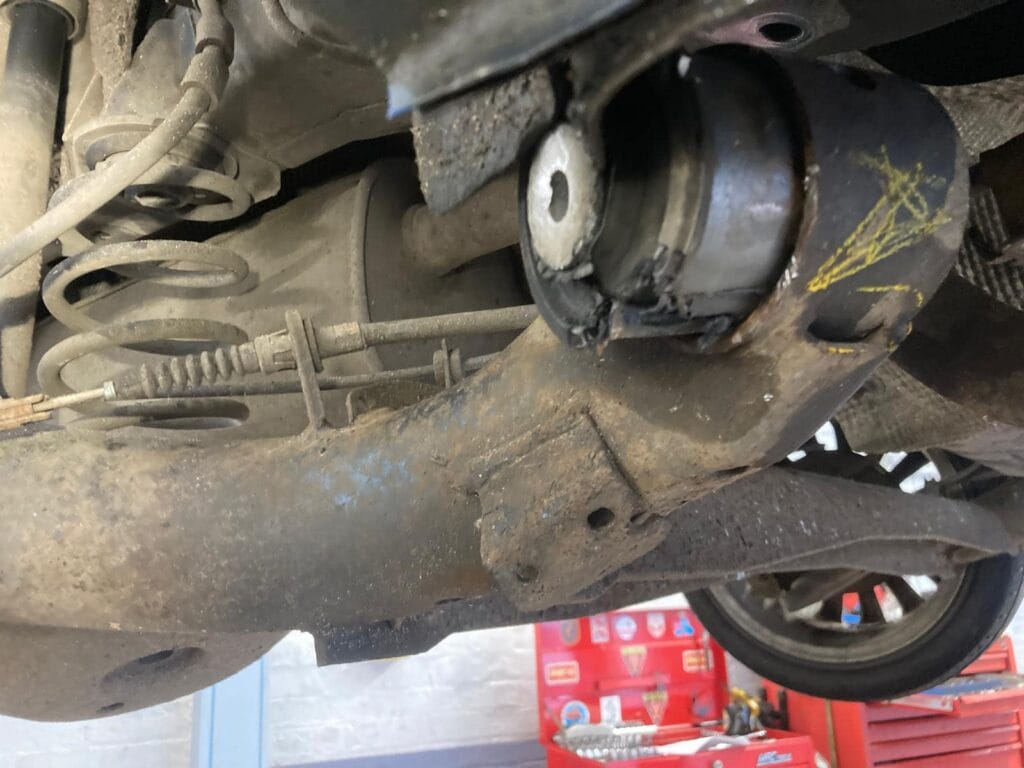
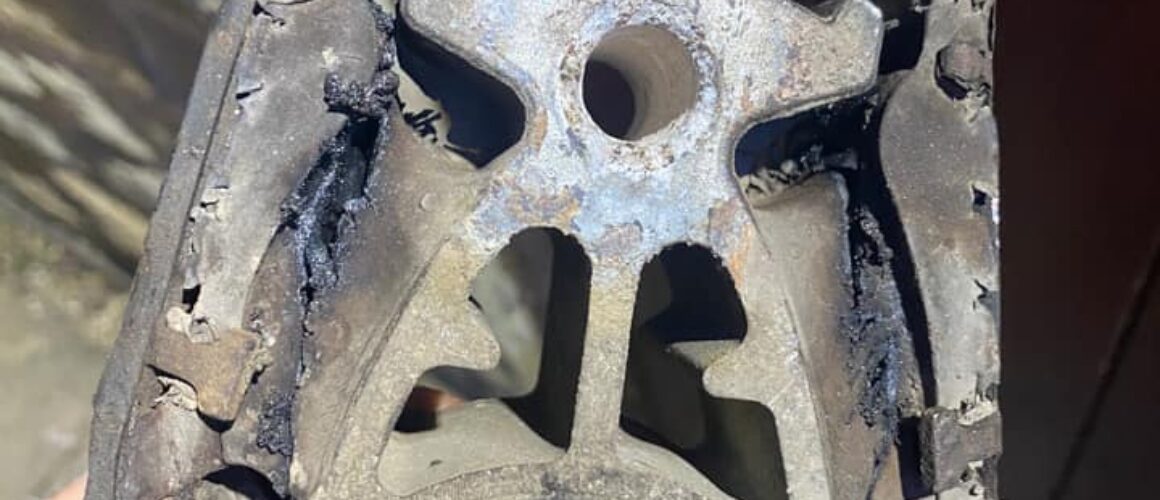
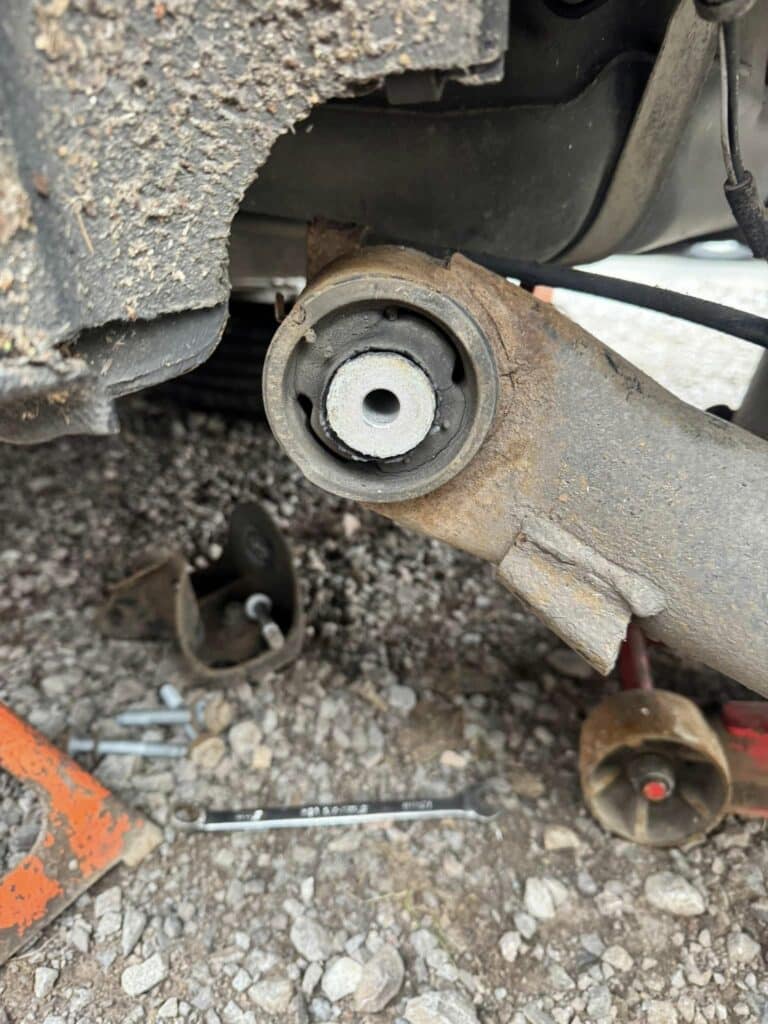
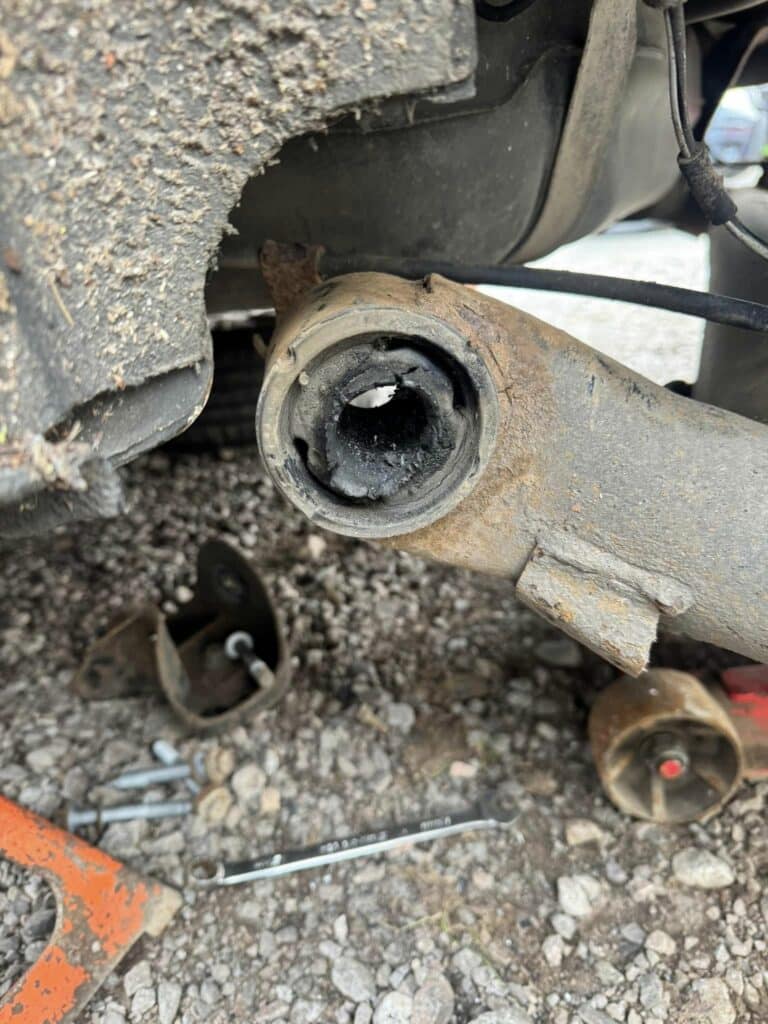
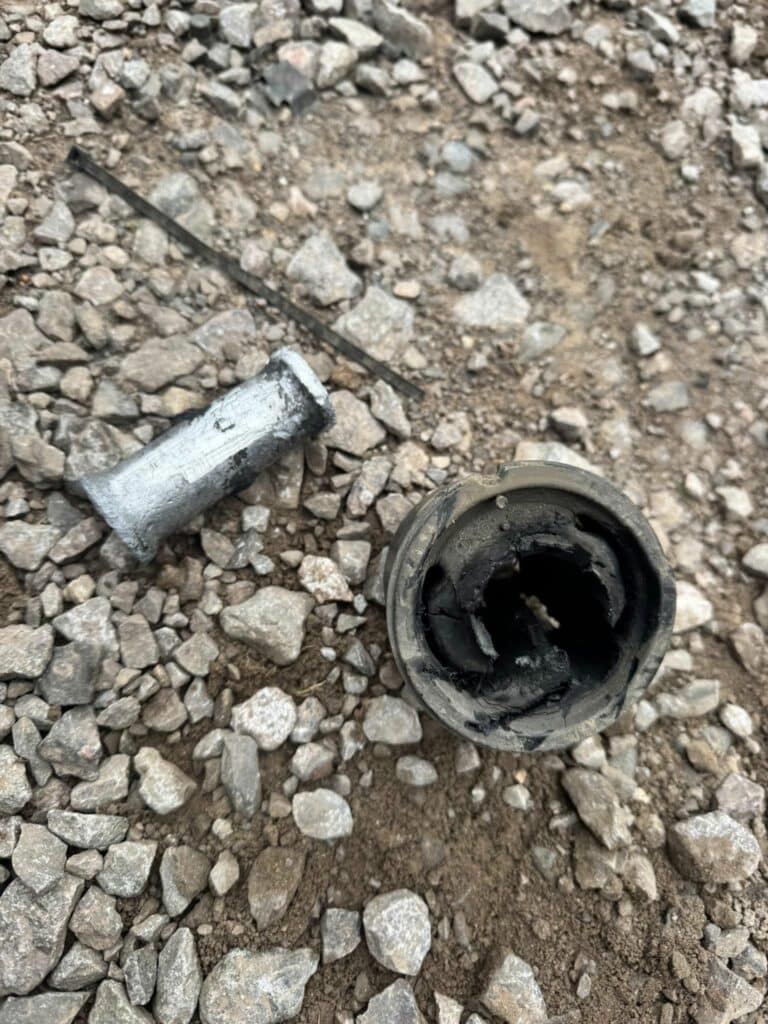
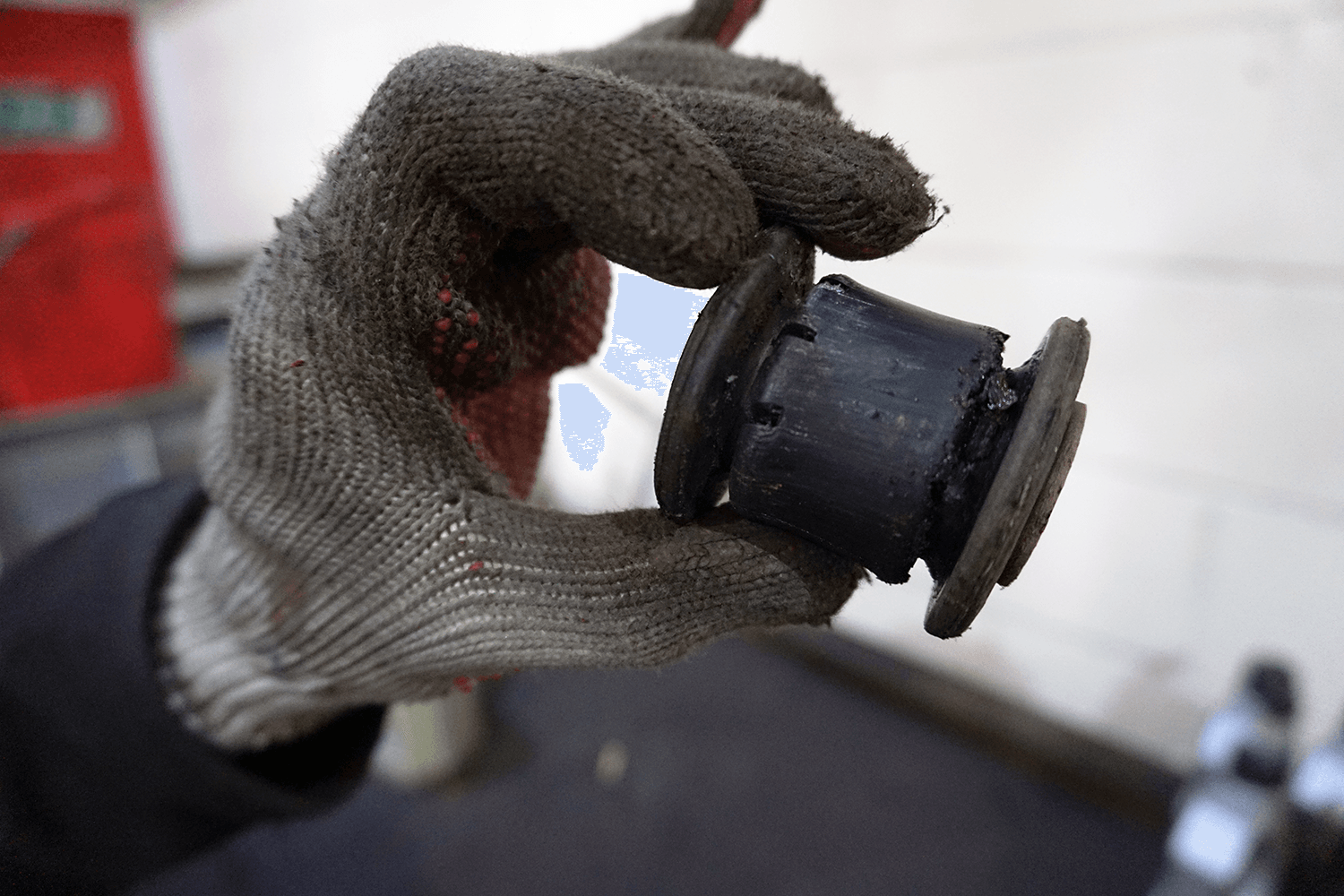
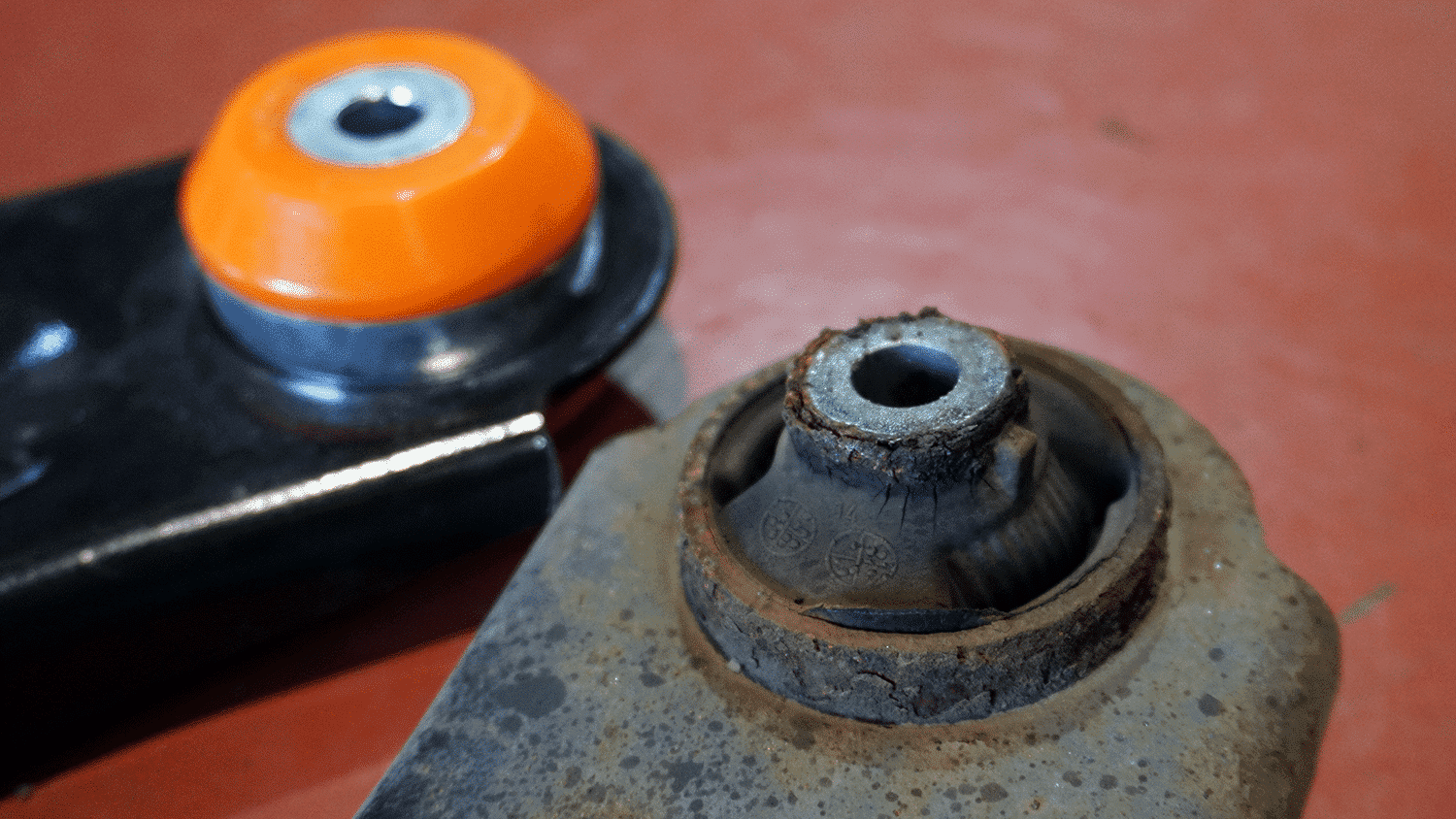
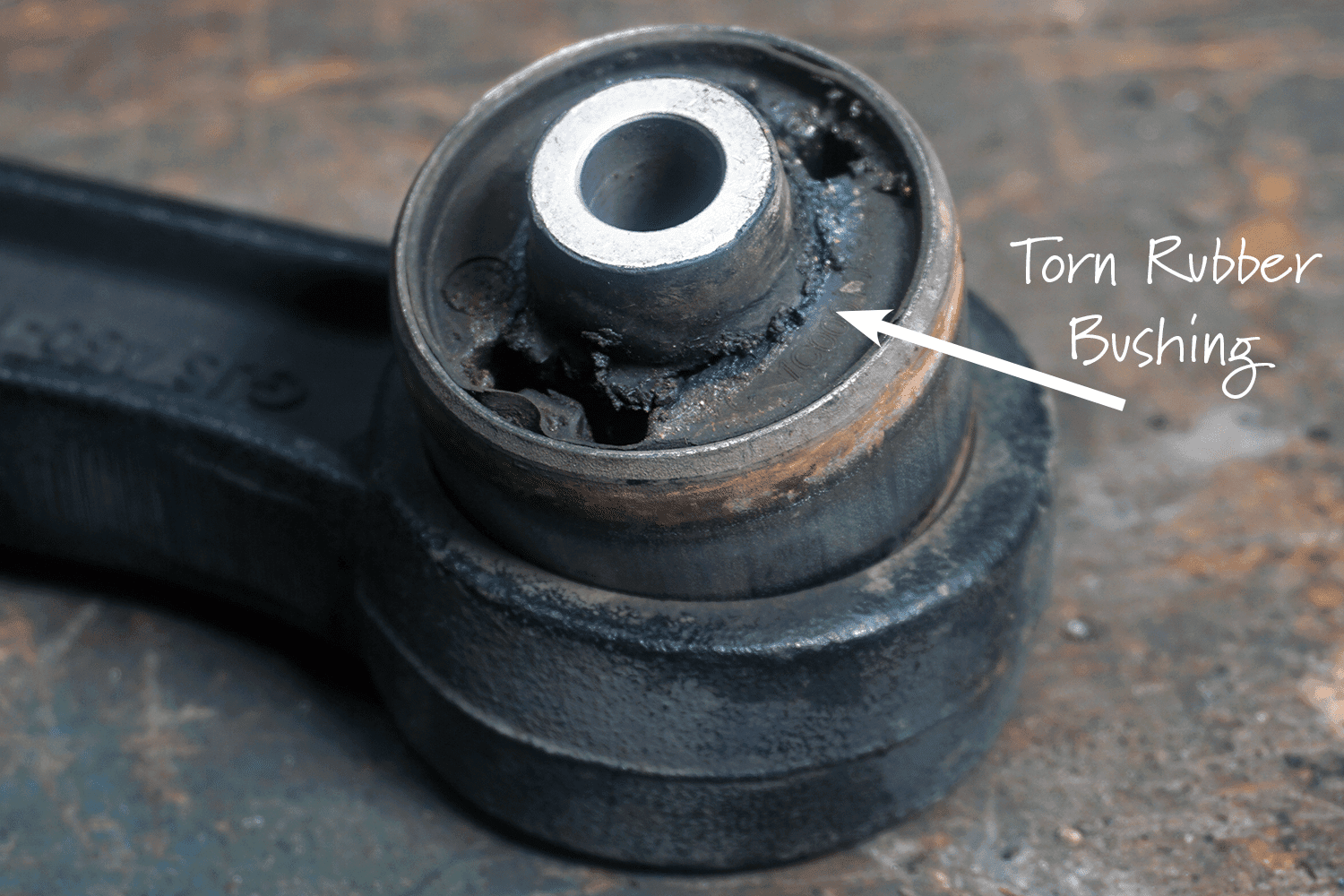
Original rubber bushes degrade with heat, moisture, road salt, and ozone exposure. Over time, they soften, crack, and detach from the sleeve, causing unwanted rear movement.
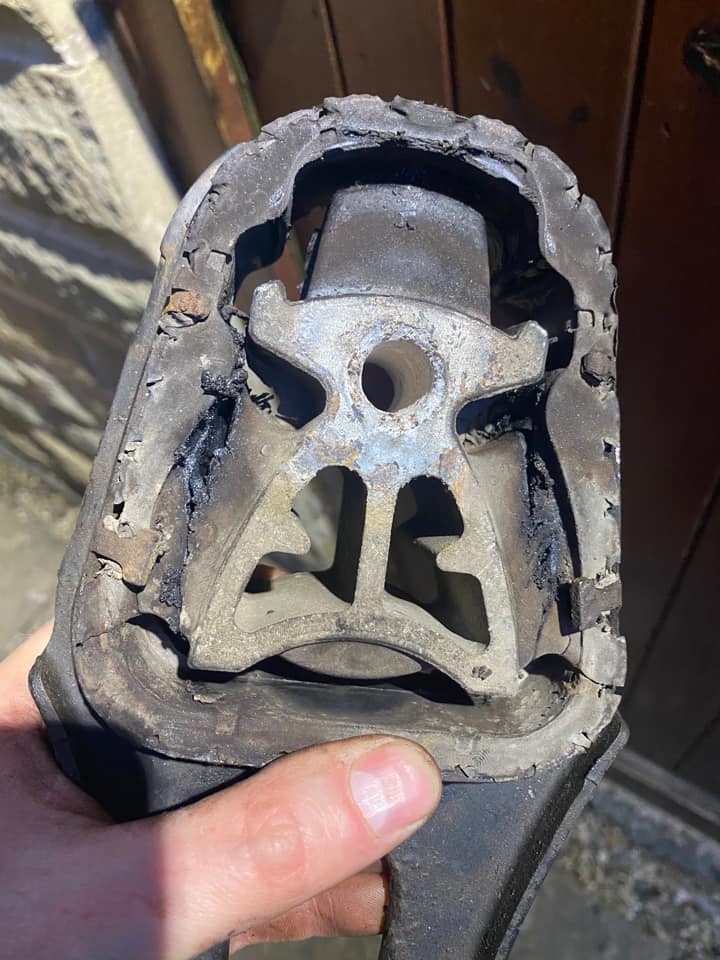
Ford Fiesta Mk7 Rubber Bushing Failure
Excessive Compliance
OEM bushes are soft to maximise comfort, but this leads to rear axle steer, unstable cornering, and increased tyre wear — especially noticeable in European driving conditions like winding Alpine roads or urban cobblestones.
Voided Design and Fatigue Points
Many OEM bushes are voided to allow flex. Once the rubber fatigues, these voids concentrate stress and accelerate failure.
Why Rubber Isn’t Ideal for Rear Axle Bushes
The rear beam must:
Support lateral forces
Control braking loads
Maintain rear toe alignment
Isolate vibrations
Rubber loses integrity under prolonged load, resulting in geometry shifts and unpredictable handling — something no European driver wants on highways, mountain passes, or city streets.
Why Polyurethane is the Smarter Choice
Simple, hassle-free installation that gets you back on the road quickly.
Resistant to Environmental Factors
Polyurethane resists oil, salt, ozone, and heat. It maintains performance for years, unlike rubber.
Controlled Compliance for Comfort
The 40BR bush is engineered to allow exactly the right movement — stabilising the rear axle without making the ride harsh.
Everyday European Driving
From German Autobahns to French country roads, Italian autostrade to Spanish urban streets, the 40BR bush delivers predictable, safe handling without sacrificing comfort.
Comfort Meets Everyday Driving
City and Highway Benefits
Reduced rear-end “thud” over bumps
Improved straight-line stability
Sharper, more predictable cornering
Noise and Vibration Reduction
Our polyurethane bush minimises vibrations and noise, keeping your daily commute comfortable while your rear axle remains perfectly aligned.
Easy Installation
DIY or Workshop-Friendly
The 40BR bush is a direct replacement, fitting without modification. Suitable for professional mechanics and knowledgeable DIYers alike.
When to Upgrade
During suspension overhauls
Rear brake replacement
Technical inspections or MOT advisories
Proven Across Europe
Relevant in Germany, France, Italy, Spain, and Scandinavia
European drivers face the same rear beam bush issues as UK drivers, often worsened by winter road salt and rough surfaces. Polyurethane is perfectly suited to these conditions.
Long-Term Solution for EU Roads
The 40BR bush stabilises your rear axle, reduces repeat repairs, and maintains geometry for safer, more predictable handling.
Bottom Line – Why Upgrade to 40BR
Direct replacement for OEM 1535296, TD1629W, Febi 34748
Improves rear axle stability for everyday European driving
Polyurethane ensures durability and comfort over standard rubber
Available for shipping across Europe — Germany, France, Italy, Spain, Scandinavia
Are you sick of the dreaded Transit dogbone mount failing on your Ford Transit & Tourneo Custom V362/V363 (2013–2023)? You’re not alone. At Polybush, we’ve been listening to Transit owners, van converters, tradespeople and fleet mechanics who keep seeing the same issue crop up again and again — the lower torque mount (often called the dogbone mount) simply doesn’t last when left in standard rubber form. That’s exactly why we developed the 40DQ Lower Torque Mount Insert.
40DQ – Ford Transit Custom Mk8 Lower Torque Mount
This isn’t just another “replacement part” — it’s a genuine performance and durability upgrade for a known weak point on these vans.
What This Fits (OEM Part Numbers)
Our 40DQ Lower Torque Mount Insert is engineered to be installed into the original mount housings for the following OEM part numbers:
Let’s break it down in simple terms: the lower torque mount (dogbone) is there to control engine and transmission movement under load — especially on acceleration, deceleration and gear changes. In a Transit carrying heavy payloads or towing regularly, that mount sees a lot of abuse.
The trouble is, the factory uses rubber in these mounts. While rubber is quiet and cheap, it has some critical weaknesses:
Rubber Weaknesses
Age hardening: Rubber hardens over time, especially when exposed to heat and engine bay oils.
Creep & distortion: Under constant torque loads, it stretches and deforms.
Water/oil contamination: Oil and road grime degrade rubber faster than you expect.
Loose feel: As it deteriorates, the engine moves more — leading to clunks, vibrations and stress elsewhere.
Search forums like TransitCenter or social groups on Facebook, and you’ll find countless owners complaining “dogbone mount snapped again”, “engine shifting under acceleration”, or “harsh vibration when pulling loads”. This is exactly the failure mode that cheap-as-chips rubber replacements can’t fix — because they’re the same material Ford originally used.
Maintains torque control without letting the engine flop about
Reduces harsh vibration without making it uncomfortable
Greatly extends life compared with OEM rubber
This isn’t “rock hard” street racer stiffness — it’s engineered to strike the right balance for a working van.
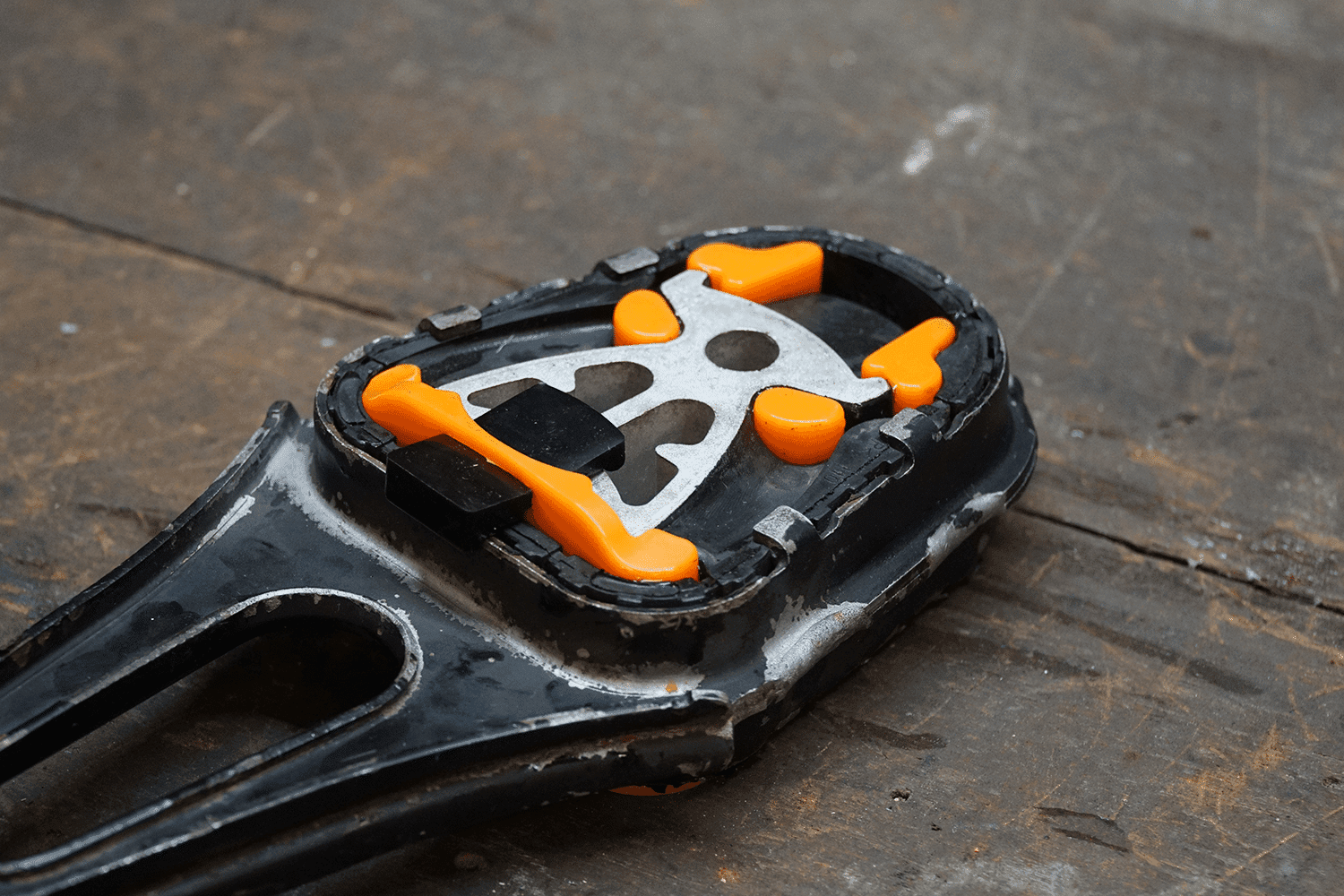
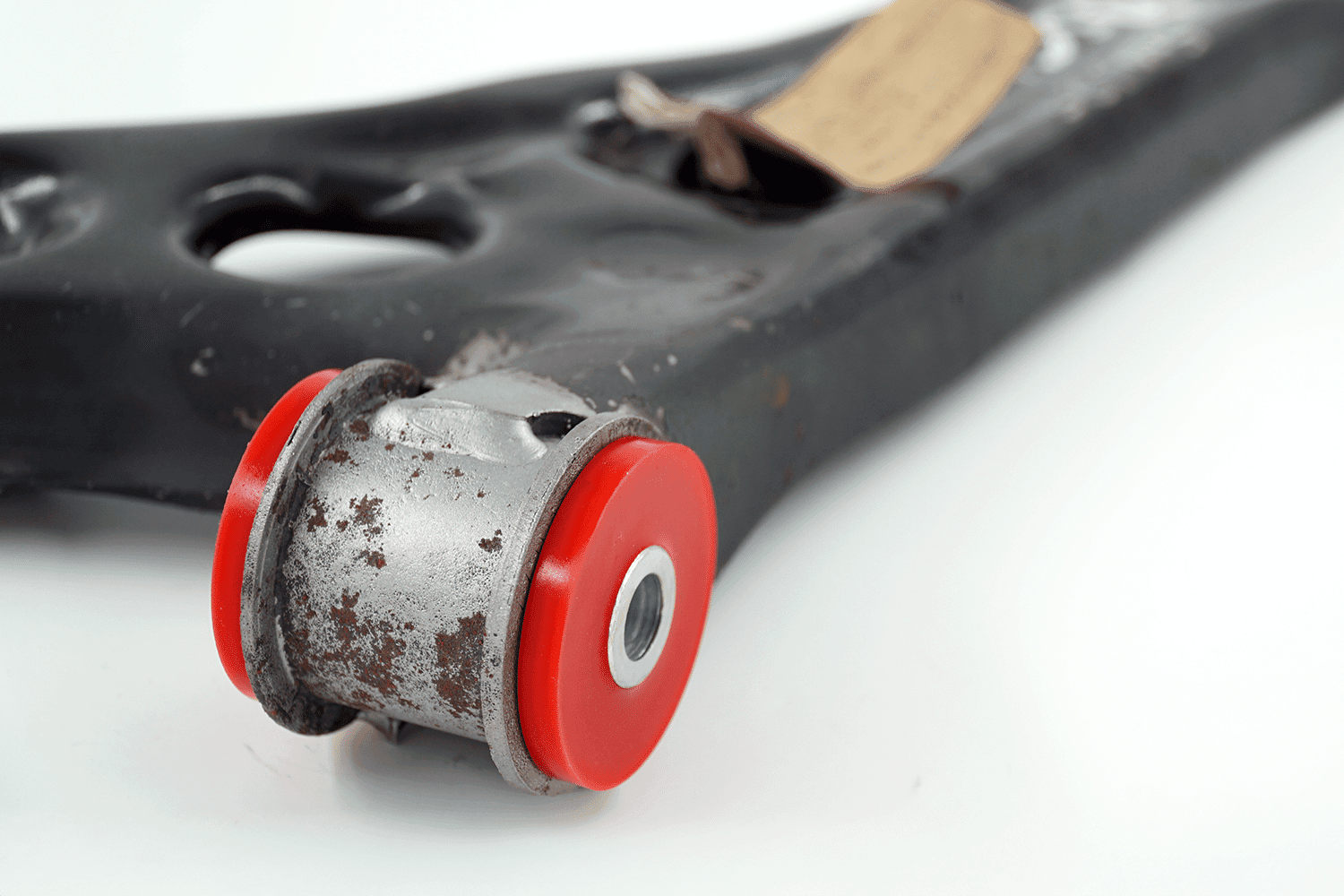
40DQ Installed in OEM Arm
Polyurethane vs Rubber — Why It Matters
Let’s chat materials for a moment — because this is where people either get it… or don’t.
Polyurethane Benefits
Feature
Polyurethane
Rubber
Load Bearing
Excellent
Moderate
Fatigue Resistance
Very high
Moderate
Oil/Contaminant Resistance
Very high
Poor
Hardness Stability
Stable over temperature
Softens/hardens with age
Noise/Vibration
Tunable
Tunable but degrades
Put simply: polyurethane does the job rubber was supposed to do — but better and for longer. It doesn’t sag or deform under load, it’s far more resistant to oil and heat, and it won’t turn into a brittle lump after a few years on the road.
So while rubber is comfortable when new, it’s a known failure point on high-stress parts like the Transit dogbone mount. Polyurethane keeps its shape, keeps your engine centred and keeps the van feeling tighter over more miles.
What This Means for You
Whether you’re a fleet manager tired of repeat failures, a van lifer prepping your Transit for a round-Europe tour, or a tradesperson relying on your van every day, the 40DQ Lower Torque Mount Insert is an upgrade that makes practical sense:
Less downtime
Reduced vibration/noise
Improved drivetrain control
Longer service life
No need for expensive aftermarket “heavy duty” rubber parts
Final Word
The Transit dogbone mount might be easy to overlook — until it fails. And when it does, you feel every gear change and hard acceleration. Our 40DQ insert isn’t about making your van feel “racey” — it’s about giving you confidence that the mount won’t be the next thing to let you down.
If you’re after a reliable, durable, engineered solution rather than a stop-gap rubber replacement, this is it.
The Iveco Daily has long been one of the most widely used commercial vehicles across Europe. From school minibuses and council transport fleets to shuttle buses, delivery vans and specialist conversions, the Daily platform is trusted for its strength, reliability and heavy-duty ladder chassis design.
However, one area that consistently causes maintenance issues across multiple generations of the vehicle is suspension bush wear.
For operators running high-mileage vehicles carrying heavy passenger loads, the original rubber suspension bushes fitted by the manufacturer often deteriorate faster than expected. This can lead to handling issues, suspension noise, uneven tyre wear and increased maintenance costs.
This guide explains the most common suspension bush problems across the Iveco Daily range and why Polybush polyurethane suspension bushes have become the trusted upgrade for fleet operators, councils and minibus specialists.
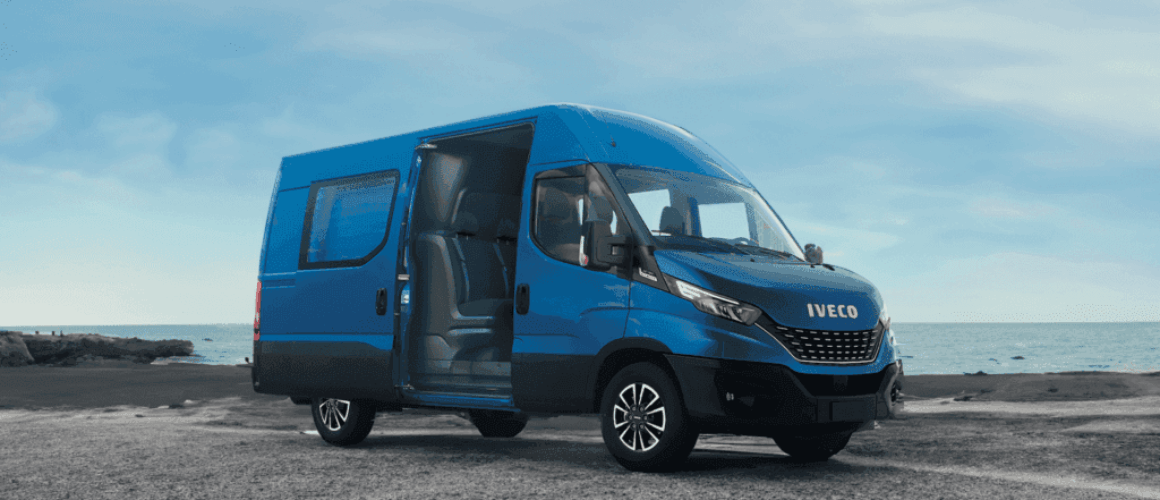
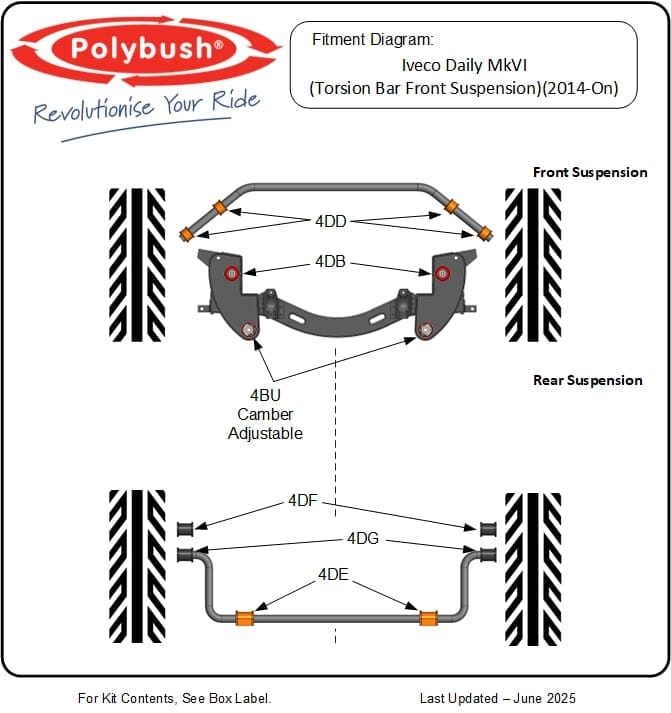
Polybush Your Iveco Daily MkVI (Torsion Bar Front Suspension) (2014-On)
Why Suspension Bushes Wear on Iveco Daily Vehicles
The Iveco Daily is designed to handle heavy loads and demanding driving conditions. Vehicles used for school transport, community minibuses and commercial fleets often operate in stop-start environments with constant passenger loading and unloading.
Over time, these conditions place significant strain on the rubber suspension bushes, which are responsible for isolating vibration and maintaining suspension alignment.
Common symptoms of worn bushes include:
• Knocking or clunking noises from the suspension
• Steering instability or vague handling
• Excessive body roll
• Uneven tyre wear
• Increased vibration through the chassis
These problems are particularly common on high-mileage minibus fleets, where vehicles may cover thousands of miles every month.
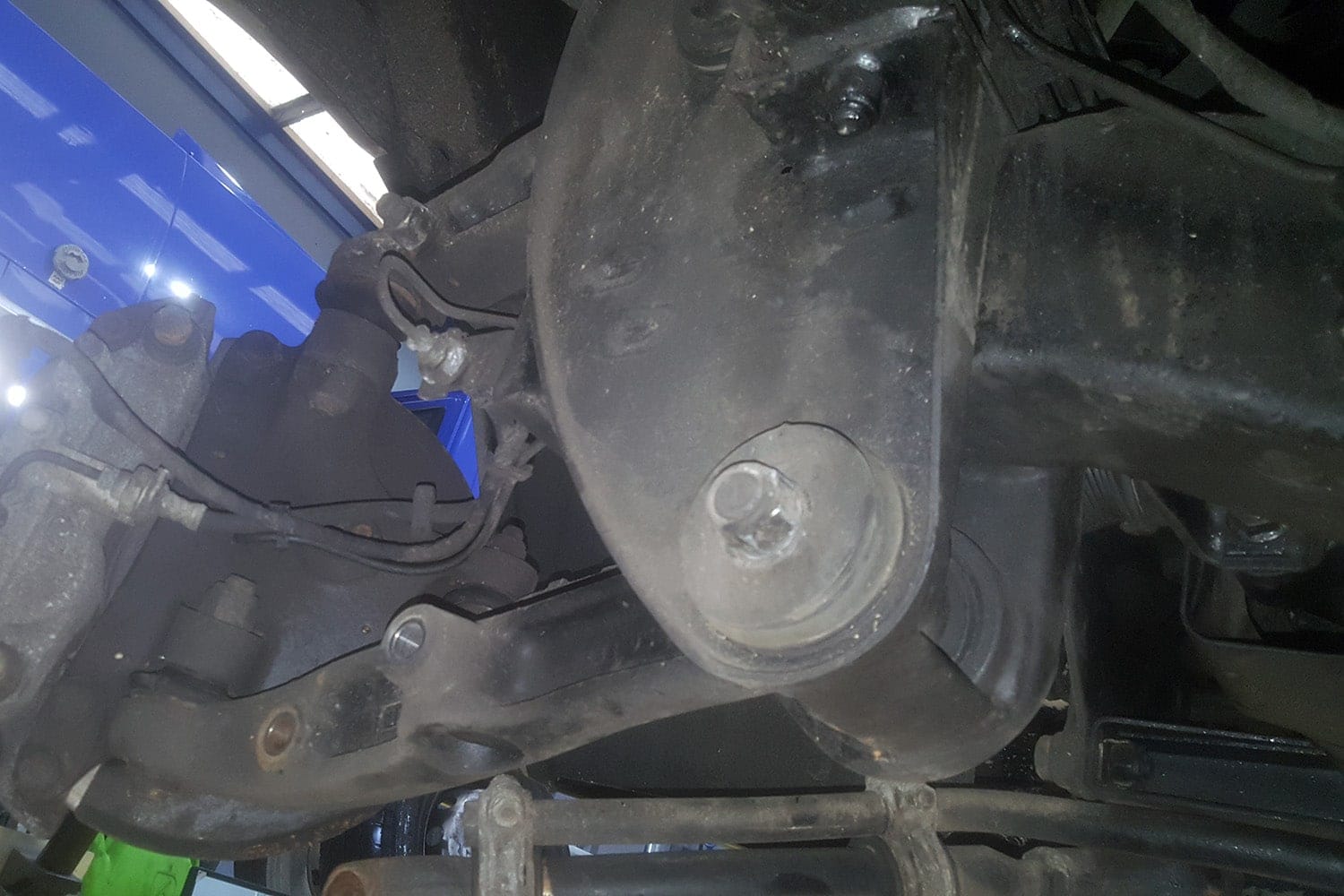
Iveco Daily Suspension Bushing Failure
Why Polybush Suspension Bushes Are the Preferred Upgrade
Standard rubber bushes can degrade due to heat, oil contamination, road salt and repeated load cycles. Once the rubber begins to soften or crack, suspension components start to move beyond their designed tolerances.
Polybush polyurethane suspension bushes are engineered to eliminate these weaknesses.
Key advantages include:
• Significantly longer service life than rubber bushes
• Improved resistance to compression and deformation
• Better control of suspension geometry under load
• Reduced maintenance frequency for fleet vehicles
• Improved steering stability and handling
Because of these benefits, Polybush bushes are widely used by fleet workshops, vehicle converters and transport operators who need durable suspension solutions.
Iveco Daily Models Covered by Polybush Suspension Bush Kits
Polybush manufactures suspension bushes for multiple generations of the Iveco Daily, covering vehicles commonly used in minibus transport, commercial fleets and specialist vehicles.
One of the earliest Daily platforms still in service today, particularly in specialist vehicles and camper conversions. Many high-mileage examples suffer from worn torsion bar suspension bushes and degraded rubber components.
A popular platform for minibus conversions and commercial transport, the MK3 Daily is known for its durability but can develop suspension movement as rubber bushes age.
Widely used by fleet operators and passenger transport services, MK4 models often exhibit bush wear in the front suspension arms and anti-roll bars, particularly on high-mileage vehicles.
The MK5 Daily became a popular base for school minibuses, welfare vehicles and community transport fleets. Suspension bush wear can affect steering precision and tyre life.
One of the most widely used platforms for modern minibus fleets, the MK6 Daily is available with torsion bar or transverse leaf spring front suspension. These vehicles frequently operate under heavy passenger loads, accelerating bush wear.
Camber Alignment Problems on Iveco Daily Torsion Bar Suspension
Many Iveco Daily models use a torsion bar front suspension setup, which can develop camber alignment issues over time. This is particularly common on vehicles used as minibuses or heavy passenger transport, where suspension components are under constant load.
When camber moves out of specification, operators may notice:
• Uneven tyre wear
• Reduced steering stability
• Poor handling when fully loaded
To address this issue, Polybush developed specialised Camber Correction Bushes, allowing technicians to adjust camber alignment and restore proper suspension geometry.
This innovation has become particularly valuable for fleet maintenance teams and minibus operators, helping extend tyre life and improve vehicle stability.
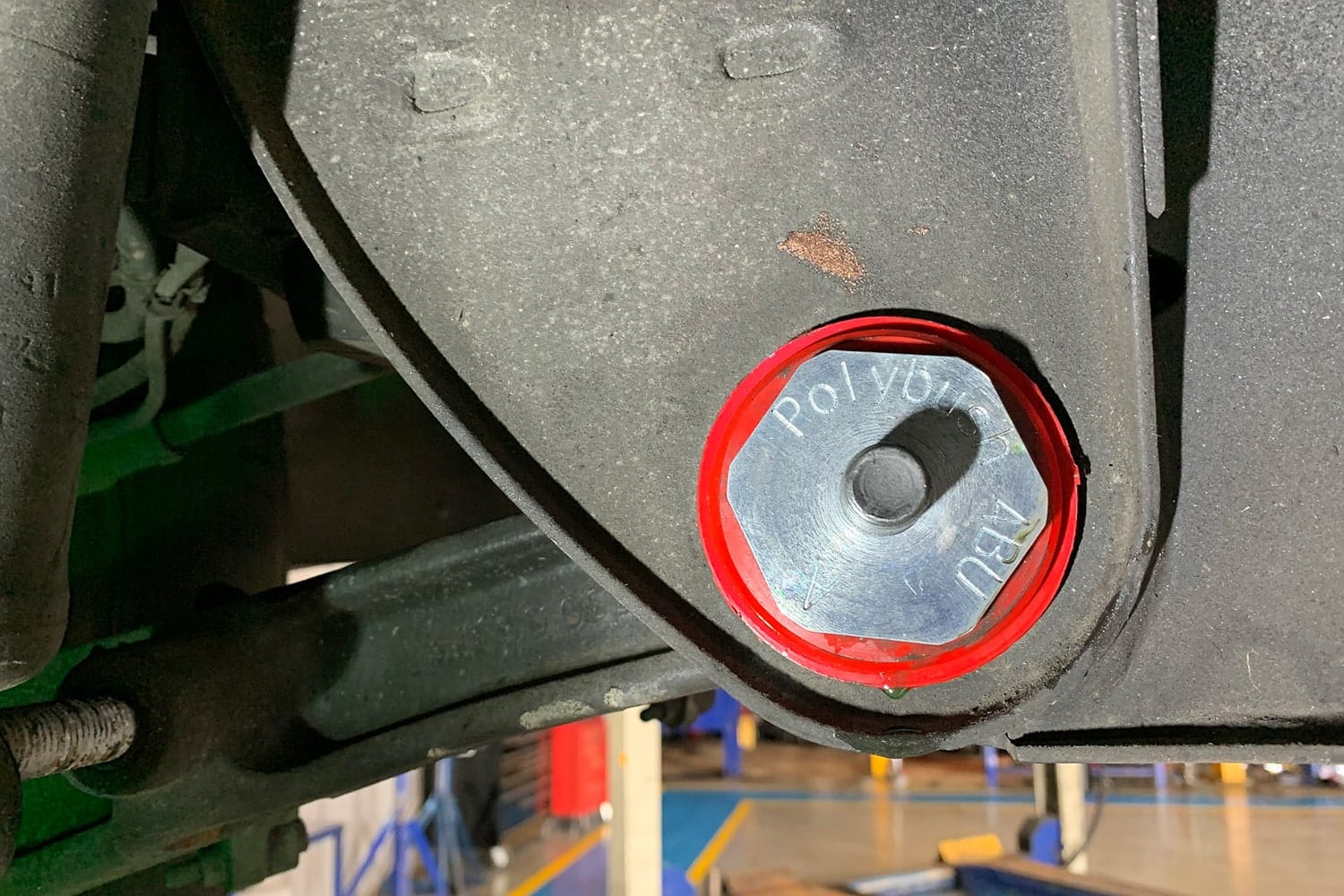
Polybush 4BU Lower Arm Camber Correction Bush – Fitted to Iveco Daily MK6 Torsion Bar
Why Fleet Operators Choose Polybush
Across the UK and Europe, Polybush has become a leading supplier of polyurethane suspension bushes for commercial vehicles.
Fleet operators choose Polybush because the products are:
• Designed and manufactured using advanced polyurethane materials
• Engineered specifically to replace factory rubber bushes
• Proven in high-mileage fleet environments
• Trusted by transport operators, workshops and vehicle specialists
For vehicles used in school transport, council fleets, airport shuttles and community transport services, upgrading to Polybush suspension bushes can significantly improve long-term reliability.
Maintaining Suspension Performance on High-Mileage Iveco Daily Vehicles
Many Iveco Daily vehicles remain in service for hundreds of thousands of miles, particularly when used in commercial transport roles. Replacing worn suspension bushes with durable alternatives is one of the most effective ways to maintain vehicle performance and reduce ongoing maintenance costs.
For fleet managers and workshops responsible for maintaining Iveco Daily minibuses, vans and passenger vehicles, Polybush polyurethane bushes provide a trusted, long-lasting suspension solution designed to handle the demands of heavy-duty transport applications.
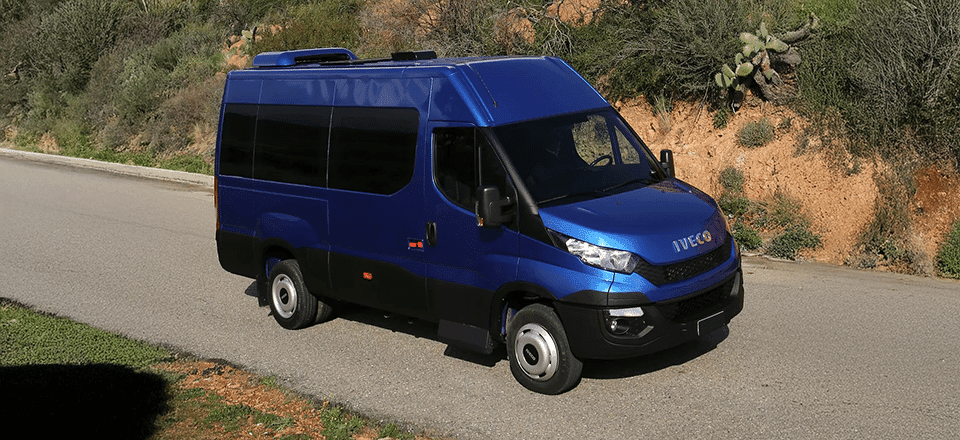
Iveco School Bus – Fitted With Polybush Suspension Bushes
Find the Right Polybush Suspension Bushes for Your Iveco Daily
Polybush manufactures suspension bushes for the following Iveco Daily models:
Each product is engineered to provide improved durability, better suspension control and longer service life compared with standard rubber bushes.
If you maintain or operate Iveco Daily fleet vehicles, minibuses or commercial vans, upgrading to Polybush bushes helps ensure consistent suspension performance and reduced maintenance downtime.
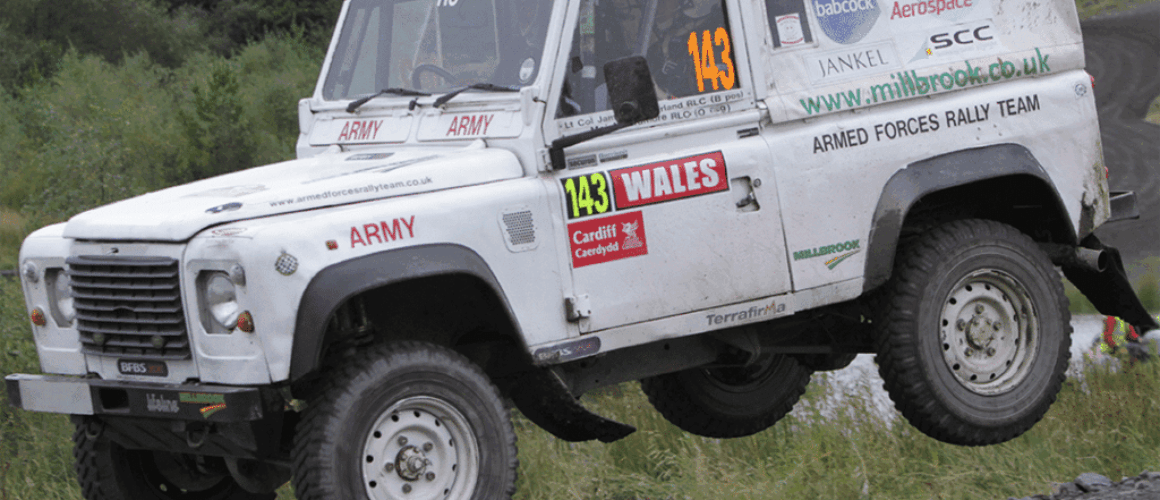
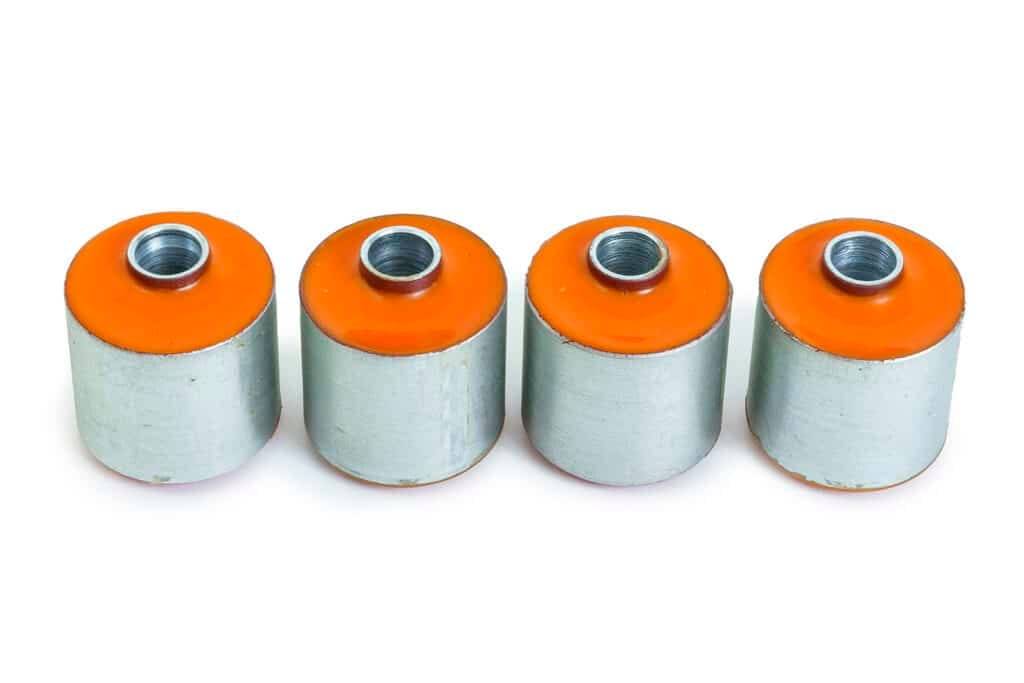
That’s where our new Polybush 1BD Caster Correction Bushes come in. Specifically designed to suit vehicles fitted with Radius Arm NTC2694, these polyurethane bushes are engineered to correct the caster angle for vehicles with 2–3″ lift kits. If your Landy is running standard ride height, we’ve still got you covered – that’s what our Polybush 1B bush is for.
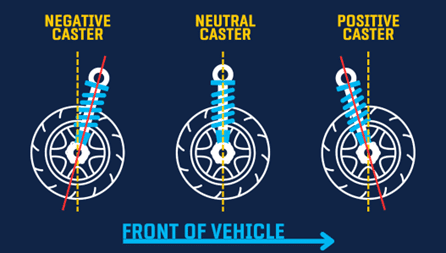
What is Caster, and Why Does It Matter?
Caster is the angle between your steering axis and vertical, viewed from the side of the vehicle. In simple terms, it’s what helps your wheels return to centre after a turn and keeps your steering stable at speed.
Caster Explanation
When you lift a solid axle Land Rover, the fixed geometry of the radius arms shifts, effectively rotating the axle and reducing positive caster. And that reduced caster leads to:
Wandering on the road – poor straight-line tracking
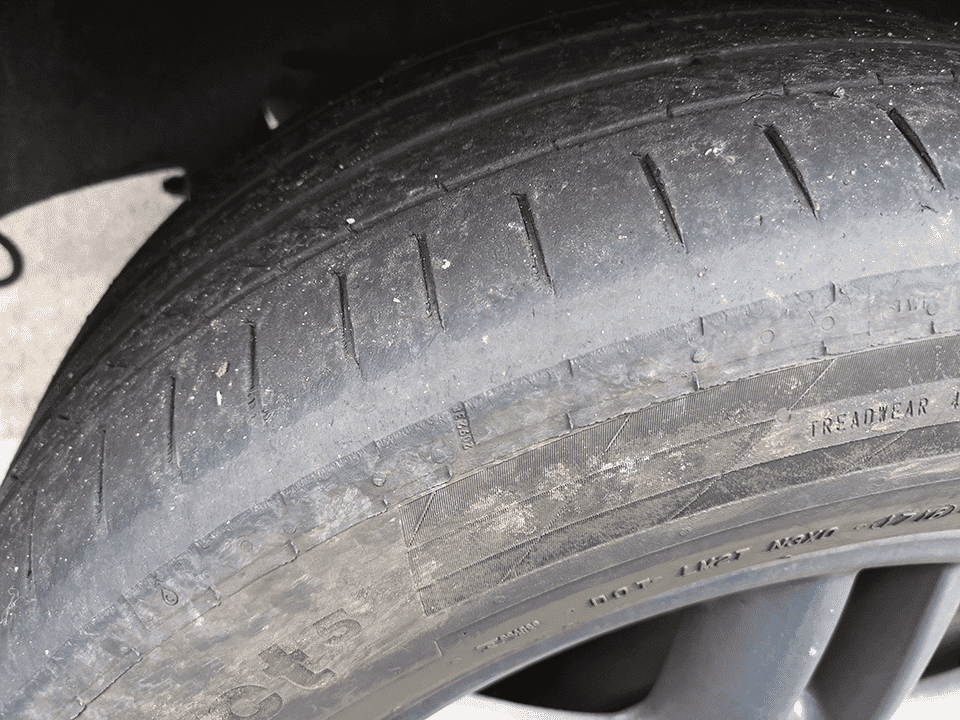
Increased tyre wear – as the tyres scrub across the tarmac
Vague steering – you constantly correct the wheel
Speed wobbles – especially on uneven roads or at motorway speeds
Correcting the caster restores your handling, improves tyre life and puts you back in control – exactly what the 1BD Caster Correction Bush is designed to do.
1BD – Caster Corrected Bushes for 2-3″ Lift
Can They Be Fitted Easily?
Absolutely, they can! On purchase, we provide easy-to-read fitting instructions for all products that have to be fitted in a certain way.
You can also find them here – 1BD Fitting Instructions & on the vehicle page.
Though we always recommend a press, in the majority of cases, you can install our bushes by hand, or with simple hand tools. But due to the 1BD’s outer metal shell, you’ll need to make a tool with a threaded bar and some sockets. We created a video showing this HERE – Or, use a press/vice.
Why Polyurethane? Why Polybush?
Traditional rubber bushes can’t always cope with the demands of a lifted Land Rover – they flex more, degrade faster under load, and can allow the geometry to shift subtly under braking or cornering.
Polybush bushes, on the other hand, are:
Durable – they resist oil, fuel, weather and UV, lasting far longer than rubber
Consistent – they hold their shape under load, giving more predictable handling
Responsive – more positive road feel without harshness
No squeaks, no maintenance – thanks to our unique Polyurethane blend and precise fitment
In short, they’re built to handle everything from green lanes to gravel tracks to long hauls on the M6, towing plant machinery – and they do it with comfort and control.
How Will It Feel on the Vehicle?
Fit a set of 1BD bushes and you’ll notice the difference straight away:
Steering feels more direct and centred – the vehicle stops “drifting” around its lane
High-speed stability improves – less correction needed at motorway speeds
Better off-road control – especially when descending or crawling, as the geometry keeps the steering more predictable
Improved tyre wear and alignment – no more fighting uneven wear caused by incorrect angles
It’s the kind of improvement you feel as much as you see – and when you’re miles from home, that reassurance matters.
Built for the Road. Proven Off It.
At Polybush, we design every bush with real-world use in mind. Our 1BD bushes aren’t just good on paper – they’re proven in everything from fully-kitted overland rigs to daily-driven Defenders that hit farm tracks Sunday and the motorway Monday.
So if you’ve given your Land Rover a bit more altitude, don’t forget to sort the attitude – get your caster back to where it should be with Polybush 1BD Caster Correction Bushes.
If you’ve got questions about fitting, compatibility, or how these work with your suspension setup, give us a shout – we’re always happy to help fellow Landy fans get their trucks handling right.
It’s one of those common faults that sneaks up on you. One minute the car feels fine, the next it’s vague through corners, unsettled on the brakes, and just not as tight as it used to be.
The OEM Rear Axle Bush Problem
The original rear beam bushes — commonly found under OEM part numbers:
…have gained a bit of a reputation, and not a good one.
The issue isn’t abuse or mileage alone — it’s the design and materials. The plastic outer shell cracks, the rubber debonds from the centre tube, and the voided rubber simply can’t cope with real-world loads for long. Once that happens, the rear axle is free to move far more than it should.
And that’s where the fun starts.
Mk7 Ford Fiesta Rear Axle Bush Failure
Symptoms of Failing Rear Axle Bushes
If your Fiesta Mk7 or Mazda 2 is suffering from worn rear axle bushes, you’ll usually notice:
A loose or unsettled feeling when cornering
Excessive vibration or road noise
Poor rear-end stability under braking
Reduced driver confidence and feedback
Left unchecked, worn rear beam bushes don’t just affect handling — they accelerate wear in tyres, suspension components, and braking performance, turning a relatively simple job into an expensive chain reaction.
Rather than replicating the weaknesses of the factory rubber bush, the 40BR is manufactured from high-quality polyurethane, engineered to resist deflection, fatigue, and debonding.
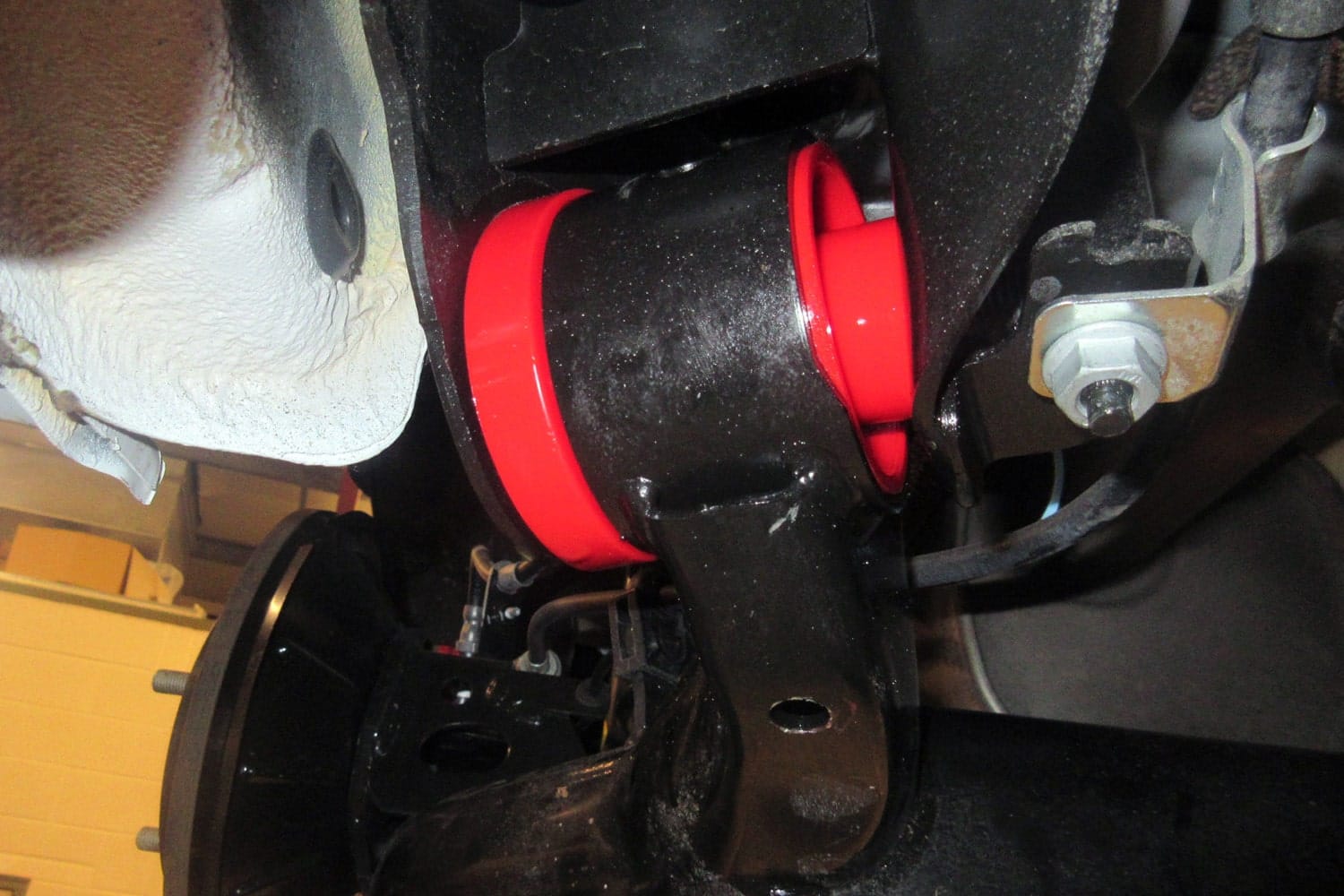
40BR Installed Into A Ford Fiesta MK7
Key Benefits of Polybush 40BR
✔ Sharper, More Predictable Handling By removing the large voids found in the OEM bush, the rear axle is properly located. The result is noticeably better cornering precision and rear-end stability — especially noticeable on Fiesta Mk7 ST models.
✔ Comfort Is Retained This isn’t about turning your daily driver into a bone-shaker. The 40BR is tuned to control movement without introducing harshness, so ride comfort remains spot-on for road use.
✔ Improved Tyre Life & Braking Stability Less axle movement means more consistent tyre contact and better braking confidence. It’s one of those upgrades that quietly improves everything the car does.
Easy Installation – No Axle Removal Required
One of the big wins with the Polybush 40BR is installation.
The Polybush 40BR Rear Axle Bush – Fitting Mk7 Fiesta
Unlike some solutions, the rear axle does not need to be removed from the vehicle. We have heard the average time it takes to install is around 30 mins! That makes it a far more appealing job for:
Independent garages
Performance specialists
Competent DIYers
Less labour, fewer seized bolts, and a quicker turnaround — all without compromising on results.
Why Polyurethane Beats Rubber Every Time
If you’re replacing rear axle bushes on a Fiesta Mk7, fitting rubber again is usually just delaying the inevitable. Polyurethane doesn’t suffer from the same ageing, cracking, or debonding issues, which means:
Longer service life
More consistent performance
Less money spent redoing the same job
As we say for good reason: “Fit it once, fit Polybush.”
Related Suspension Upgrades for Fiesta Mk7 & Mazda 2
While the 40BR rear axle bush solves the most common rear-end issue, it’s often worth considering related components while you’re there:
If you’ve ever been halfway through a project and realised the exact bush, spacer or mount you need doesn’t exist, you’ll know the sinking feeling that comes with it. That’s exactly why we manufacture our Polyurethane Bar—a machinable polyurethane rod that lets you create the precise component your build demands.
In this post, we’ll run through what makes polyurethane bar so handy, why it’s better than trying to adapt an ill-fitting part, and how it can save the day for classic restorers, fabricators, off-roaders and anyone who enjoys making their own solutions.
What Is a Polyurethane Bar?
A polyurethane bar (sometimes called a polyurethane rod) is exactly what it sounds like: A solid length of high-quality polyurethane that you can machine on a lathe. We produce it in a variety of diameters, so you can pick the size closest to your end goal and turn it down to your exact measurements.
Why Polyurethane Bar Beats Adapting an Existing Part
Can’t Find What You’re Looking For | Try Polyurethane Bar
We’ve seen plenty of people try to modify a rubber bush or shave down something “close enough” to get themselves out of trouble. Honestly, it’s rarely worth it. Rubber deforms, collapses, and generally doesn’t appreciate being re-imagined into something it was never meant to be.
Machining a lathe-ready polyurethane rod, on the other hand, gives you:
Perfect fitment
You’re not fudging anything. You machine the part to exactly the dimensions you want—outer diameter, inner diameter, length, chamfers, the lot.
Far stronger material than rubber
Polyurethane laughs in the face of oils, road grime, UV, compression cycles and general abuse. If you’re going to the trouble of machining a custom part, you may as well make it last.
Consistency and repeatability
Need to make a second bush? A spare? A mirrored pair? Easy. Same bar, same material, same process.
Who Benefits Most From Using Polyurethane Rod?
Honestly, anyone with a lathe. But the biggest winners tend to be:
Classic car restorers
Some old cars use oddball bush sizes the aftermarket never produced in polyurethane. With a polyurethane bar, you can recreate them exactly—no compromise, no hunting scrapyards, no praying for NOS.
Fabricators & custom builders
If you’re designing your own suspension arms, engine mounts, subframe bushings, vibration isolators or even just mounting an intercooler / uprated radiator, a raw polyurethane rod lets you tweak your design until it’s bang on.
Off-road & 4×4 tuners
Land Rover owners, I’m looking at you. When you’re experimenting with geometry, lift kits or custom arms, polyurethane rods let you build the right isolator or bush for your setup.
Anyone solving a vibration or fitment issue
Sometimes a standard bush is too soft, too tall, too wide, or not quite the right hardness. Machined polyurethane lets you dial in the response you want.
How Easy Is It to Machine Polyurethane?
If you’ve handled nylon bar or other engineering plastics, this isn’t much different. It cuts cleanly, holds tolerances nicely, and doesn’t fight you like some softer elastomers.
A few quick tips:
Use sharp tools
Take moderate cuts (don’t try to peel massive chunks off)
Keep the part well supported to avoid deflection
Clean up edges with a light skim or sharp blade
The beauty is that you’re not battling the material—polyurethane behaves itself and produces a tidy, functional component.
Why Keep A Polyurethane Bar in Your Workshop?
Because it’s one of those “save the day” materials. If you’ve got a length on the shelf, you’re never stuck waiting for a weird-size bush or resorting to a bodged solution.
I’d argue it’s as essential as keeping a stock of aluminium bar or mild steel in the corner—except polyurethane solves the kind of problems metal never can.
Ready to Make Your Own Bushes?
If you’re fed up with chasing parts that don’t exist, or you simply want the freedom to create exactly what your project needs, our Polyurethane Bar is the way to go.
Various sizes, proper automotive grade, and built to take real-world punishment.
Your project deserves a part that fits perfectly—so why settle for anything else?
The Mk7 Fiesta uses a torsion beam rear axle. It’s a simple, strong design – great for daily driving – but it relies heavily on two large rubber bushes that mount the beam to the body.
From the factory, these bushes are soft rubber. Over time they:
Crack and split
De-bond from their outer sleeve
Soften and allow excessive movement
Start knocking when pulling away or going over bumps
Fiesta – Axle Bush Failure
Fiesta – Axle Bush Debonded
Fiesta – Axle Bush Worn & Debonded
Common symptoms include:
A dull thud from the rear when changing gear
Instability during braking
Rear-end “wiggle” on uneven roads
Uneven tyre wear
Vague rear suspension feel
Many owners describe it as “Fiesta movement” at the back of the car – that slight delay before the rear follows the front.
If you’ve searched for Ford Fiesta rear suspension bushes or Fiesta rear axle bushes making noise, chances are these are the culprits, and your bushes have already failed!
The Polybush 40BR Rear Axle Bush – A Proper Fix
Our Polybush 40BR replaces the original Ford rear beam bush.
OEM Cross Reference: 1535296, 1751679, 1805815, 1805866, 1871475, 8V51-5K653-AA, AY11-5K653-AA, D65128460
Even these aftermarket bushings:
Delphi No: TD1629W
Febi No: 34748.
Unlike the factory rubber bush, the 40BR is manufactured from our specially formulated, UK-made polyurethane.
And that changes everything.
Why Polyurethane Outperforms Rubber
Let’s clear something up: this isn’t about turning your Fiesta into a track car. This is about making it better at being a daily driver.
Here’s why polyurethane makes sense on the rear axle:
1. It Doesn’t Degrade Like Rubber
Rubber is vulnerable to:
Oil contamination
Road salt
Heat cycling
Age hardening
Polyurethane is resistant to all of the above. It won’t crack, perish or soften in the same way. That means:
No premature failure
No repeated rear axle bush replacement
No coming back to the same job in 18 months (or sometimes as little as MOT to MOT)
If you’re looking up rear axle bushes Ford Fiesta cost, it’s worth considering the long-term picture. Fit them once. Do it properly. Our bushes are great for people who want to book their car in, get the work done and never need to look at it again. Rubber might have a low up-front cost, but replacing it every year doesn’t make financial sense.
2. Retains Comfort – Without the Sloppiness
There’s a misconception that polyurethane equals a harsh ride. That’s true of some race-spec bushes. It’s not true of ours.
The 40BR is engineered to:
Control unwanted rear beam movement
Maintain correct axle geometry
Absorb road vibration
Retain Comfort By Fitting 40BR
The results?
You retain everyday ride comfort, but lose the rear-end wobble and knock. The car feels tighter and more planted, especially under braking and on roundabouts.
On a Ford Fiesta Mk7 rear axle, that balance is exactly what you want.
3. Sharper Handling Without Trying to Be “Sporty”
Even if you don’t drive a Fiesta ST, you’ll notice the difference.
More predictable rear end
Improved stability on uneven roads
Better response to steering inputs
For Fiesta ST rear axle owners, it’s even more noticeable – but for standard models, it simply makes the car feel fresher and less worn.
It’s refinement, not aggression – A product you’d be happy putting on your mum’s car.
Why We Sell Them as a Pair?
Polyurethane behaves differently from rubber; you must replace these bushes in pairs.
Mixing one old rubber bush with one polyurethane bush will create uneven compliance across the rear axle. That can affect braking stability and handling balance.
Additionally, if one bush has failed, realistically, the other side will fail soon too. So taking the car off the road once, having one labour bill and one inconvenience is better.
As such, we supply them as matched sets. It’s the correct way to do the job… Again, do it once, do it right!
Installation – Straightforward and Affordable
Good news: this isn’t a nightmare job.
On the Mk7 Fiesta:
The rear beam stays on the car
The old plastic-shelled bushes are hammered out
The new Polybush units are pushed in by hand
A competent DIYer with simple hand tools can tackle it at home. Alternatively, most garages charge a fairly modest amount because the job is straightforward and not time-consuming.
Simple, hassle-free installation that gets you back on the road quickly.
Compared with some bush changes, this is refreshingly simple.
If you’ve been pricing up Ford Fiesta rear axle bush replacement cost, you’ll likely find labour is reasonable – and with polyurethane, you won’t be repeating it.
Common Search Questions – Answered
“Is this the same as Ford Fiesta rear subframe bushes?”
On the Mk7 Fiesta, the torsion beam effectively acts as the rear subframe. When people search for rear subframe bushes Ford Fiesta or Ford Fiesta rear subframe bushes, they’re usually referring to these rear beam bushes.
“Is this relevant to other Fiesta models?”
Whilst we make bushes for other fiesta’s, the main focus here is the Mk7:
Owners of earlier models (like 2007 Ford Fiesta rear axle or Mk6 Fiesta rear axle bushes) will require different part numbers, all of which we have HERE
“What about Fiesta Mk8 bushes?”
The Mk8 uses a different rear suspension layout, so the bushes differ.
However, we do offer suspension bushes for these models, you can find them HERE
When Should You Replace Rear Axle Bushes?
If your Ford Fiesta rear suspension feels:
Noisy at the back
Loose under braking
Unsettled mid-corner
Clonking when pulling away
It’s worth inspecting the rear axle bushes Fiesta owners often overlook.
On many Mk7s, they’re worn by 60–80k miles. On cars used for short trips or city driving, sometimes sooner.
Why We Recommend the Polybush 40BR
We fit them to our own daily-driving Ford Fiesta’s! We wouldn’t fit rubber again!
Not because rubber is terrible – but because it’s a consumable part in this location. The rear beam places a constant rotational load through those bushes. Polyurethane handles that load better, maintains its shape, and keeps the axle located correctly.
40BR Fitted to Staff Member Mike’s 2015 Ford Fiesta MK7
With Polybush, you get:
Longer service life
Improved stability
Maintained ride comfort
Better value over time
And you stop chasing rear-end noises.
The Bottom Line
Our Polybush 40BR Rear Axle Bush is a simple upgrade that solves a very common problem on the Mk7 Fiesta and Fiesta ST. Fit them as a pair, refresh the rear of the car properly, and you’ll be reminded how composed and solid a Fiesta should feel.
Sometimes the best upgrades aren’t about performance – they’re about restoring the car to how it should have felt all along.
Polybush 44CB: The Ultimate Front Wishbone Front Bush Upgrade for Audi, VW, Seat & Skoda
When it comes to replacing front suspension bushes on Audi, Volkswagen, Seat, and Skoda models, part numbers like 1K0 407 182, 5Q0 407 182, 1K0 407 182 F, Delphi TD521W, and Febi 24390 are among the most common.
If you’re searching for a long-lasting, easy-fit upgrade for these OEM parts, look no further than the Polybush 44CB – a UK-made polyurethane suspension bush designed for effortless installation and a lifetime of consistent performance.
Redesigned with ease of fitment in mind, the new Top Hat-style 44CB ensures quick, accurate installation and a perfect fit. It’s also the ideal upgrade for vehicles already fitted with Polybush 44EX, delivering improved control and refined handling without sacrificing ride comfort.
Polybush 44CB Fitted To Arm – Replacing 1K0-407-182, 1K0-407-182-F, 5Q0-407-182
Why Choose Polybush 44CB Over Rubber or Generic Polyurethane?
If your car’s suspension is still running original rubber wishbone bushes, chances are they’ve begun to crack, perish, or soften over time. Even aftermarket rubber replacements don’t last long when exposed to oil, UV light, and road grime.
Here’s why Polybush 44CB is a smarter, longer-lasting choice:
Longer-Lasting Performance
Manufactured in the UK from a unique automotive-grade polyurethane, Polybush bushes resist oil, fuel, UV, and ageing. They won’t split or degrade like rubber, giving you years of reliable service and sharper handling.
Improved Handling & Steering Response
A firmer, precisely engineered material reduces unwanted bushing flex. The result? More consistent wheel alignment, better steering feedback, and tighter control under braking and cornering — without harshness.
ORIGINAL EQUIPMENT – 1K0-407-182, 1K0-407-182-F, 5Q0-407-182 – Removed From Arm – You Can See There’s Lots of Flex
Comfort Intact
Unlike overly hard polyurethane alternatives, Polybush bushes are carefully tuned to retain OE comfort while enhancing stability. Perfect for daily drivers, fast-road use, or vehicles carrying heavier loads.
No Grease, No Squeaks
Polybush bushes are dry-fit – no messy greasing or special compounds required. Once installed, they stay silent and consistent mile after mile, without the need to re-grease like other manufacturers.
Made in the UK | ISO 9001 Certified
Every Polybush product is manufactured in the UK to exacting standards and ISO:9001 certified, ensuring precision fitment, performance, and durability.
Redesigned for Simplicity: The Top Hat Advantage
The latest 44CB Top Hat-style design makes installation easier than ever. The new profile allows for a smoother, straighter fit into the wishbone with less effort and no specialist tools.
For workshops and home mechanics alike, that means less time on the ramp and a perfect alignment every time.
Already using our Polybush 44EX? The 44CBis the natural next step — offering a compatible, refined upgrade that enhances both comfort and performance.
Fast Road & Lightly Modified Cars – More control, less flex.
Older Models – Replace perished or unavailable OEM bushes.
Fleet & 4×4 Vehicles – Reliable, long-life suspension solution – The perfect solution for Taxi’s, Police, Ambulance or First Responder vehicles, where reliability is key.
Skoda Octavia Taxi – Fitted with Polybush Polyurethane Suspension Bushings
Polybush achieves the perfect balance — OEM comfort with upgraded performance and durability.
Upgrade to Polybush 44CB Today
The Polybush 44CB is a direct replacement for: OEM 1K0 407 182, 1K0 407 182 F, 5Q0 407 182, Delphi TD521W, and Febi 24390.
Whether you’re refreshing your Audi A3, VW Golf, Skoda Octavia, or Seat Leon, this British-made polyurethane upgrade delivers sharper handling, longer life, and a smoother ride.
Why Rubber Bushes Don’t Last Anymore – And Why Polybush Is the Answer
If your car feels sloppy in the corners, knocks over bumps, or your tyres are wearing unevenly, chances are your suspension bushes are on their way out. It’s a common problem – but did you know that on some modern vehicles, rubber bushes are failing in as little as 3–6 months?
And if your car is no longer under warranty, that’s a costly repair you’ll be paying for again and again.
So why don’t rubber bushes last like they used to – and what can you do about it?
12AN – Replacing The Main Failure Bush on Juke, NV200 & X-Trail Etc.
How Long Should Suspension Bushes Last?
Traditionally, rubber bushes would last years, often a decade or more, especially on older cars. They provided a good balance of comfort and control, isolating vibration while keeping your suspension geometry in check.
But things have changed. Modern rubber simply isn’t what it used to be.
Back in the day, rubber was a brilliant material – strong, flexible, and durable.
Today’s rubber, however, has been weakened by regulations that removed many of the additives and chemicals that gave it strength and resilience.
The result? Bushes on modern cars are failing earlier than ever. It’s not unusual for factory-fitted rubber bushes to start splitting and perishing after only 3–5 years. In extreme cases, particularly on heavier or high-powered vehicles, we’ve seen failures within 3–6 months of replacement.
No More Failure with OEM Polaris Drop Link Bushes
Why Rubber Bushes Fail So Quickly
There are three main reasons modern rubber bushes don’t last:
Weaker materials – modern rubber lacks the resilience of older compounds.
Heavier vehicles – today’s cars, SUVs and vans weigh more than ever before.
Higher stresses – more power, more torque, bigger wheels, and poor road conditions all put extra strain on suspension components.
This combination means that rubber simply isn’t up to the task anymore.
Why Polybush Is Different
Polybushes are made from high-performance polyurethane, engineered to resist the very things that kill rubber:
Oil and fuel contamination
Road salt, grit, and grime
Heat and cold cycles
Constant flexing under load
Because of this, Polybushes routinely outlast rubber by 4–5 times – and in some cases, especially on classics, we’ve seen them last up to 20 times longer.
That means fewer replacements, less labour cost, and no nasty surprises when the MOT comes around.
The Driving Benefits of Polybush
It’s not just about durability – Polybush transforms the way your car drives:
Sharper handling – no more vague steering or sloppy cornering.
Better stability – especially under heavy braking or towing.
Reduced wear – tyres, suspension arms, and even brakes last longer because everything stays in alignment.
Comfort where you want it – Polybushes are carefully tuned to suit your vehicle, so you don’t end up with a bone-shaking ride – Read More
VW Anti-Roll Bar Bushes, Fitted to Caddy Mk3.5
Why Sticking With Rubber Costs More in the Long Run
Replacing rubber bushes every few years might sound manageable, but when some are failing in just months, the costs quickly add up – especially when you’re out of warranty.
By fitting Polybush once, you:
Avoid repeat labour bills.
Stop wasting money on short-lived rubber.
Keep your car driving like it should, for longer.
The Bottom Line
Rubber bushes were great once – but times have moved on. With weaker compounds, heavier cars, and higher demands, they’re no longer fit for purpose.
If you want a long-lasting, better-performing solution, Polybush is the clear choice. Fit them once, and you may never need to worry about your bushes again.
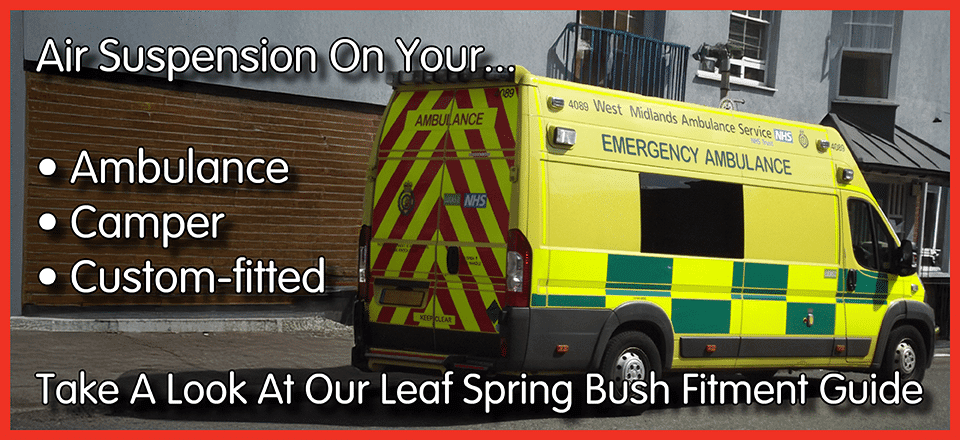
If you own or manage a Citroën Relay, Fiat Ducato, or Peugeot Boxer from 2006 onwards—especially one converted into a campervan, used as an ambulance, or operating as part of a fleet delivery service—you may already know that your air suspension setup differs from standard van models.
The good news? Polybush has you covered.
Worn Bushes Will Also Cause Tyre Wear – Further increasing costs.
Whether you’re trying to eliminate annoying knocks and poor handling from worn bushes or save on costly full component replacements, our polyurethane air suspension bushes are the perfect solution.
Why Air Suspension Bushes Vary in Campers, Ambulances, and Delivery Vans
These vehicles often come equipped with factory or aftermarket air suspension systems to enhance ride comfort and handling under varying loads. However, this means they don’t use the same bush sizes or configurations as standard steel-sprung vans.
Because of this, many Citroën Relay, Fiat Ducato, and Peugeot Boxer owners struggle to find the right replacement bushes—especially if their vehicle was professionally converted for medical, leisure or commercial use.
Find the Right Bush – Use Our PDF Measurement Guide
To help you identify the exact Polybush part you need, we’ve created a clear PDF guide with dimensions and images of each air suspension bush we offer for these platforms. All you need to do is:
Measure your existing bushes or mounting points
Compare the dimensions with our guide
Get in touch with us for advice or to place your order
Still unsure? Just drop us a photo and your measurements—we’re always happy to help.
Why Choose Polybush Over Rubber?
Whether you run a single campervan or a fleet of front-line ambulances, rubber just doesn’t last in high-load, high-use scenarios. Here’s why Polybush is the smarter choice:
Longer Lifespan – Polyurethane is resistant to wear, oils, UV, road salt, and varying conditions.
No Perishing or Cracking – Unlike rubber, Polybush doesn’t degrade .
Improved Stability – Tighter tolerances give better ride control and reduced body roll.
Cost-Efficient – Replace just the failed bushes rather than complete arms or air bag mounts.
Case Study: How We Helped an Ambulance Fleet Save Thousands
One of the UK’s regional ambulance services contacted us after struggling to source replacements for the failed air suspension bushes on their Fiat Ducato-based ambulances. The main dealer advised them to replace the entire mounting assembly, at a significant cost per vehicle.
After working with their maintenance team and reviewing measurements from our guide, we supplied only the specific polyurethane bushes that had worn—saving them from scrapping perfectly serviceable components.
Result? Thousands of pounds saved, less vehicle downtime, and longer-lasting performance.
Perfect for Campers, Ambulances and Fleet Delivery Vehicles
If your vehicle falls into one of the following categories, this applies to you:
✅ Motorhome or Camper Conversion with air suspension
✅ Ambulance or Patient Transport Service using Relay, Ducato or Boxer chassis
✅ Delivery Fleet Vans with air-ride suspension kits fitted
✅ Any modified suspension layout not using standard steel springs
Don’t gamble on generic parts or complete assemblies. With Polybush, you get precision-fit polyurethane bushes that are made in the UK and built to outperform rubber.
Get In Touch – We’re Here to Help
Whether you’re a fleet manager, ambulance workshop, campervan owner or converter, our experienced team can guide you to the right solution.
📞 Call us on 01978 664316 📥 Download the air suspension bush measurement guide [here] 🛒 Order by phone or through one of our approved distributors